Views: 3 Author: NUUTOO Publish Time: 2026-10-26 Origin: Site
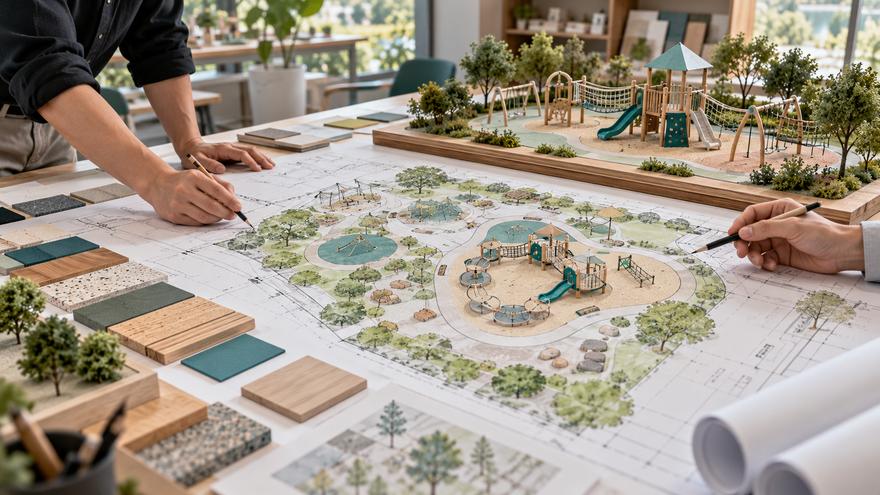
Table of Contents
1. Establish the brief and verify the site information
2. Develop and compare the concept layout
3. Coordinate technical information before ordering
4. Agree supply, delivery and installation responsibilities
5. Plan reviews, handover and the operating record
6. Frequently Asked Questions and Quote Preparation
A commercial playground design process turns a project brief and measured site information into a coordinated layout, an agreed equipment schedule and the information needed for delivery, installation and handover. Begin with intended users, activity priorities, access needs and purchasing responsibilities. Review the concept against real site constraints before approving appearance. Confirm which drawings, product documents and local reviews are required, who supplies each item and when decisions become binding. Manufacturing, shipping and installation should follow the agreed scope rather than assumptions based on a rendering or a general service description.
Before choosing equipment, describe the project the team needs to deliver. A municipal park, school courtyard and commercial visitor attraction can have different operating hours, approval routes and maintenance resources. Record who will own the assets, who will operate the space and who can approve design changes. A clear contact list prevents important decisions from being dispersed across separate conversations with no agreed owner.
Provide a dated site plan with boundaries, entrances, levels, retained features and known constraints. Identify the source and reliability of the survey. Photographs help explain existing conditions, but they do not establish dimensions, underground services or structural capacity. Mark unresolved information as provisional and assign someone to obtain it before the affected design decision is approved.
Connect the brief to activities rather than a list of attractive structures. Explore the playground equipment range to identify possible climbing, sliding, balancing and imaginative play experiences. Then explain which experiences matter for the intended visitors. The brief should also describe circulation, supervision and maintenance access so that equipment selection is part of a workable space.
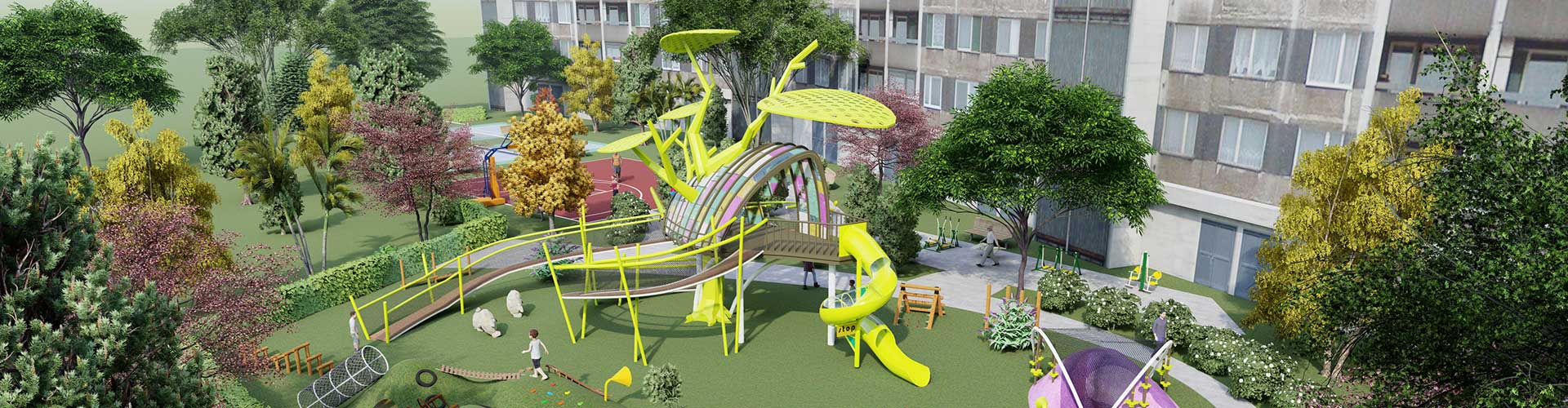
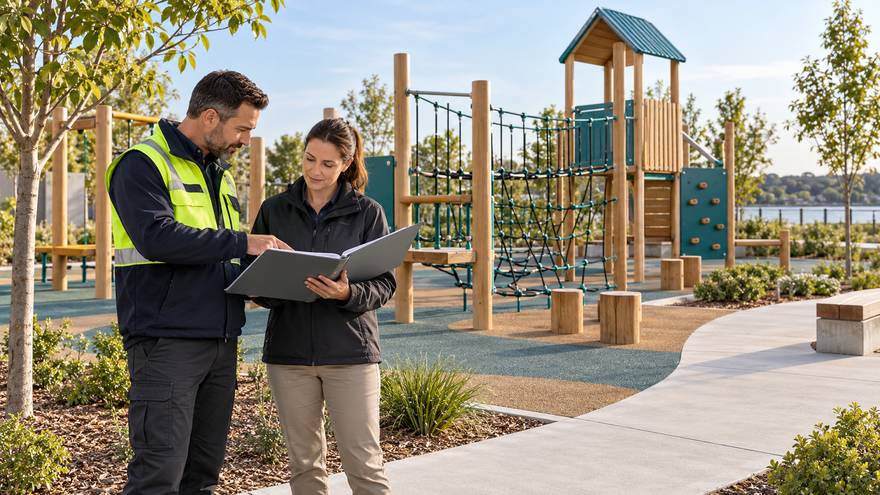
Concept illustration: Playground project brief and site information review concept. AI-generated; not a completed NUUTOO project or construction drawing.
A concept plan should show how the proposed equipment relates to entrances, routes, seating, planting and other site functions. Ask the designer to distinguish equipment outlines from the surrounding space required for the selected products. A compact rendering can hide congestion, awkward approaches or maintenance barriers. Review the plan at a usable scale and keep assumptions visible.
Compare alternatives using the same activity priorities and site information. One proposal may emphasise a distinctive theme while another distributes activities across separate areas. Ask what each option changes for movement, observation and future operation. Avoid judging alternatives solely by the number of structures or the visual complexity of the model; neither measure establishes how well the space will serve its users.
For custom playground equipment, identify which parts require individual development and which use defined components. Agree how the team will review appearance, configuration and technical information. A concept approval should state what has been accepted and what remains subject to further design, product documentation or local review. Keep a record of the selected revision.
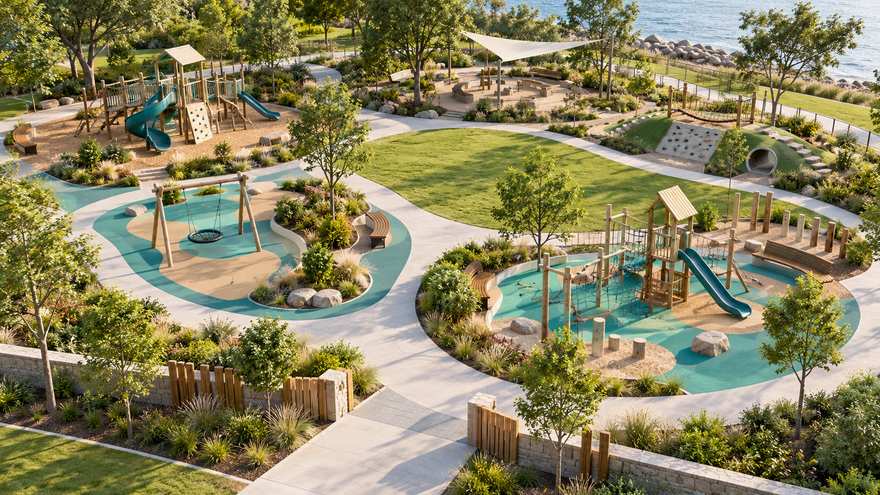
Concept illustration: Coordinated playground concept layout. AI-generated; not a completed NUUTOO project or construction drawing.
Move from the concept to an identifiable equipment schedule. Confirm model references, quantities, proposed specifications and the documents relevant to the actual configuration. Where information is not yet available, agree its issue stage and review responsibility. Similar-looking products should not be treated as interchangeable when their dimensions, interfaces or use conditions differ.
Coordinate the equipment with foundations, drainage, surfacing and other site works through the appropriate project parties. Ask what information the supplier provides and what the local designer or contractor must develop. The purpose is to resolve interfaces before work proceeds. A drawing prepared for another site, or a generic installation sketch, should not silently become the approved construction information for this project.
Use the playground supplier documents checklist to organise the requested file set. Review any test or conformity evidence against its stated product scope and the destination requirements. This article describes a procurement workflow; it does not replace project-specific technical review. Record approval conditions, open questions and revised documents together with the order schedule.
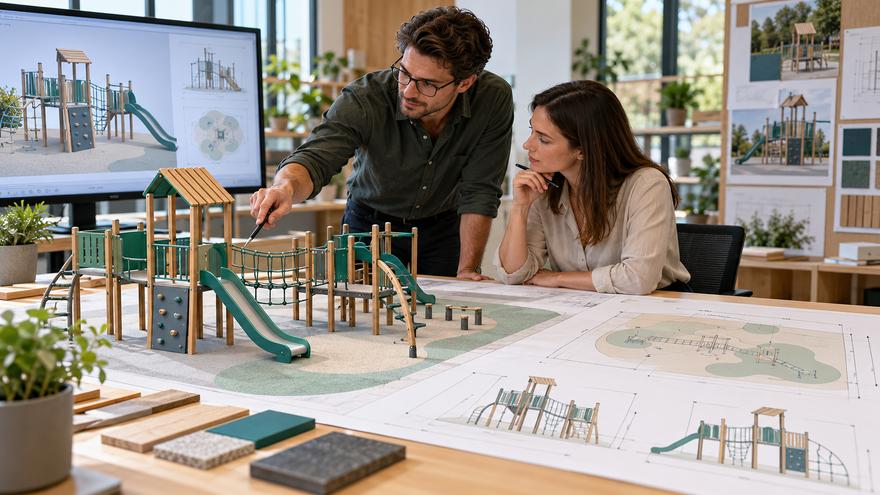
Concept illustration: Playground technical design coordination concept. AI-generated; not a completed NUUTOO project or construction drawing.
Before the order is released, compare the written offer with the approved brief. Identify included design work, equipment, packing, transport arrangements, installation information and support. Clarify exclusions and the organisations responsible for the remaining work. General website descriptions of service capability do not establish that every activity is included in an individual overseas contract.
Ask how production changes will be communicated and approved. A revised component, finish or arrangement may affect related documents and site coordination. Record the change, the person accepting it and the information that must be updated. Confirm the actual project schedule with the supplier and contractors; there is no universal duration that applies to every custom playground design process.
Prepare the site and delivery arrangements using the agreed equipment and installation information. Confirm unloading access, handling resources, storage, sequencing and the boundary between supplier guidance and local installation work. Coordinate playground surfacing with equipment and site requirements. Remote guidance, on-site supervision and a complete installation service are different scopes and should be described explicitly.
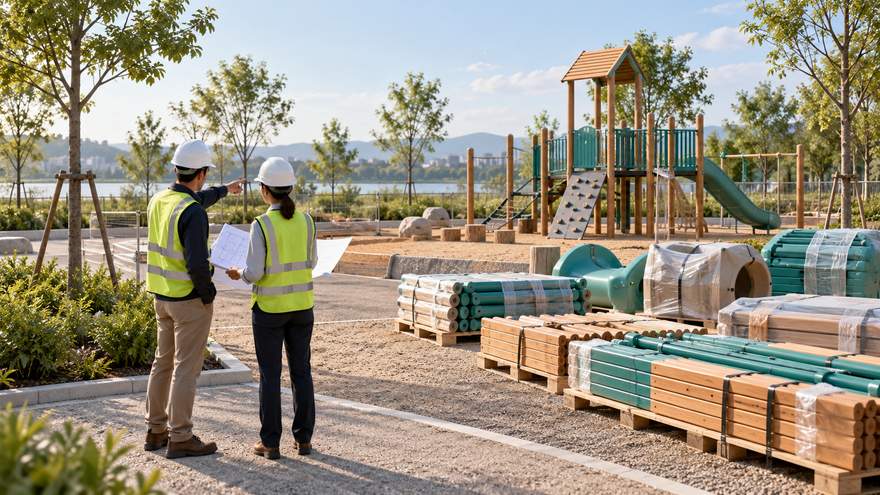
Concept illustration: Playground delivery and installation coordination concept. AI-generated; not a completed NUUTOO project or construction drawing.
Build review stages into the project instead of treating handover as a final collection of files. At each stage, identify the decision, the information supporting it and the party responsible for acceptance. This makes it easier to recognise whether a delay is caused by missing site information, an unresolved design interface or an outstanding purchasing decision.
| Review stage | Information to check | Responsibility to agree |
|---|---|---|
| Brief | Users, priorities, site information | Buyer and project team |
| Concept | Activities, routes, equipment arrangement | Designer and buyer |
| Technical coordination | Models, interfaces, required evidence | Supplier and relevant advisers |
| Order release | Approved revision, inclusions, exclusions | Buyer and supplier |
| Delivery and installation | Site readiness, handling, work boundaries | Supplier and local contractors |
| Handover | Required records, instructions, open items | Buyer, installer and operator |
Agree the inspection and acceptance process required for the project, including who conducts reviews and how outstanding items are closed. A delivery note confirms a logistics event; it does not establish that installation and acceptance requirements have been satisfied. Keep the distinction clear in the project record and avoid opening decisions based on incomplete information.
The operator should receive the relevant instructions, inspection and maintenance guidance, parts references and agreed support contacts. NUUTOO describes design, production and project services on its company information page. Confirm the services and documents included in the specific order. A usable operating record should connect the supplied equipment to the approved information and written support arrangements.
Concept illustration: Playground operating handover concept. AI-generated; not a completed NUUTOO project or construction drawing.
An early concept may help discuss priorities, but identify its assumptions and limitations. Obtain the missing information before approving decisions that depend on accurate dimensions, levels or other site conditions.
Not necessarily. State whether approval covers appearance, arrangement or a defined technical submission. Record the outstanding drawings, specifications and responsibilities rather than treating an image as a complete construction package.
Agree that responsibility with the relevant project advisers and authorities. Suppliers need clear destination requirements, but their product information does not replace every local design, installation or acceptance review.
Yes. Confirm operating resources, access, parts identification and the instructions to be provided. These affect practical decisions during design and should not first appear as unresolved questions at handover.
Dated measured plan, site photographs and unresolved survey questions.
Intended users, essential activities and access priorities.
Project contacts and approval responsibilities.
Desired design and equipment supply boundaries.
Required drawings, evidence and review stages.
Delivery, installation and operating responsibilities.
Send the brief through the NUUTOO project enquiry page. Request a written proposal showing how the design process, supplied equipment and agreed services connect to your actual project.
 English