Views: 0 Author: NUUTOO Publish Time: 2026-10-16 Origin: NUUTOO
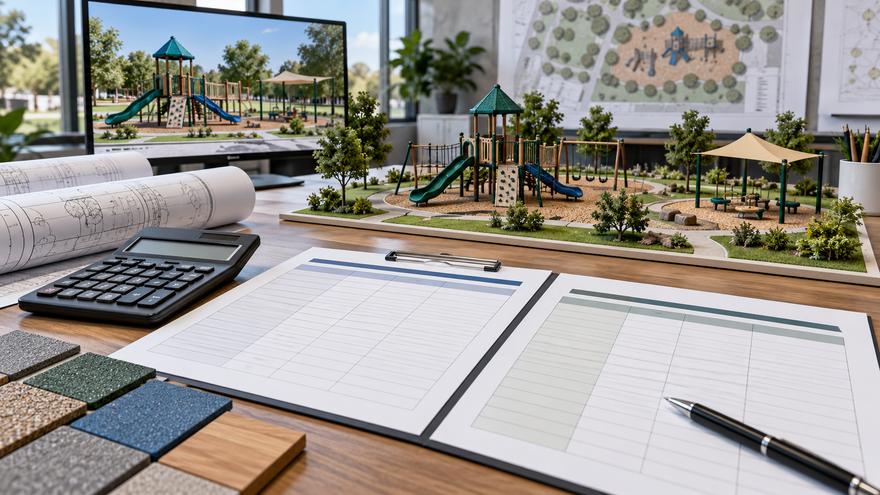
Table of Contents
1. Define which cost you are comparing
2. Understand equipment and custom design factors
3. Include site works and surfacing
4. Check delivery installation and handover boundaries
5. Compare quotations with a shared cost schedule
6. Frequently Asked Questions and Quote Preparation
Commercial playground equipment cost depends on the selected activities, models, materials, custom work and purchasing scope. The equipment price is only one part of a complete project budget: site preparation, foundations, surfacing, freight, unloading, installation and handover may be priced separately. Compare offers using the same layout revision and responsibility boundaries, with taxes and delivery terms identified. Request project-specific quotations rather than relying on an unsupported universal price range. Keep provisional allowances visible until the information needed to confirm them has been reviewed.
A buyer asking for a playground price may mean the supply price of a structure, the delivered equipment cost or the amount needed to open the completed space. These are different purchasing boundaries. Start by naming the budget boundary, location, currency and tax assumptions before requesting a number. This helps prevent an equipment-only offer being mistaken for a complete project proposal.
Prepare a simple cost schedule with separate lines for equipment, related design work, site works, surfacing, transport, installation and handover. Mark the organisation expected to supply each item. An item that another contractor will undertake should stay in the project budget even if it is excluded from the equipment manufacturer's offer.
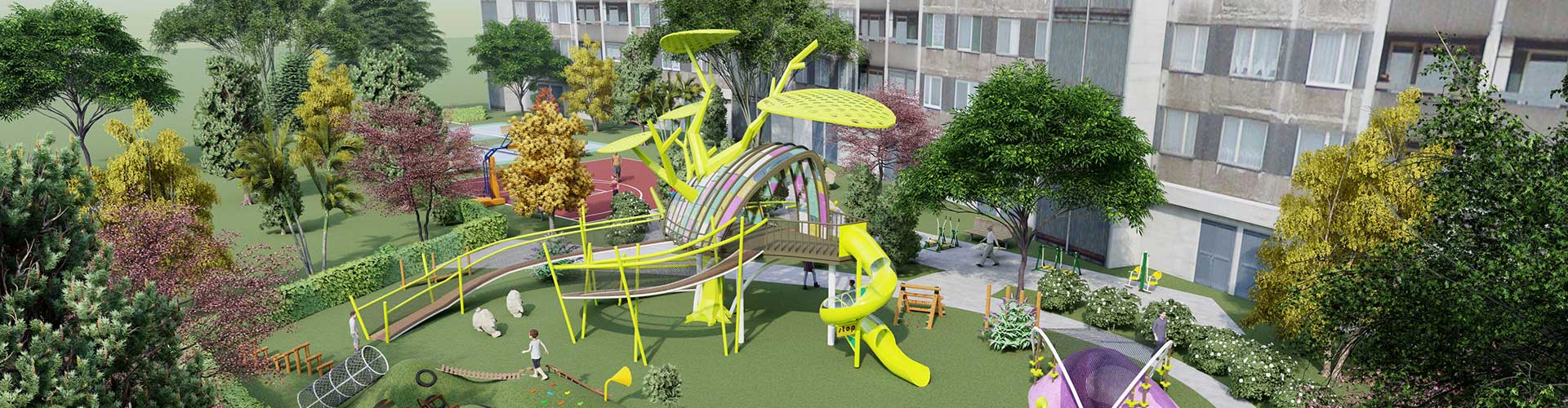
Use the playground equipment range to establish an initial activity schedule. A price comparison needs identifiable models or an explained design scope. Two images of similarly sized playgrounds can conceal differences in components, specifications and required surrounding works, so appearance alone is a weak basis for budgeting.
Concept illustration: Commercial playground budget planning concept. AI-generated; not a completed NUUTOO project or construction drawing.
Activity selection changes both the equipment schedule and the space it needs. Compare the intended play experiences before counting structures. Climbing, balancing, slides and imaginative activities can be combined in different ways. A proposal with fewer components may cover the brief effectively, while adding repeated activities may consume budget without resolving an unmet project priority.
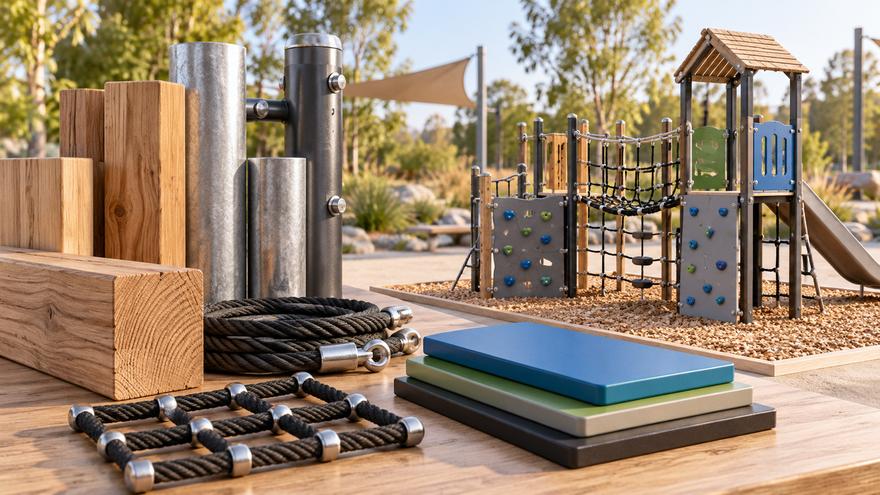
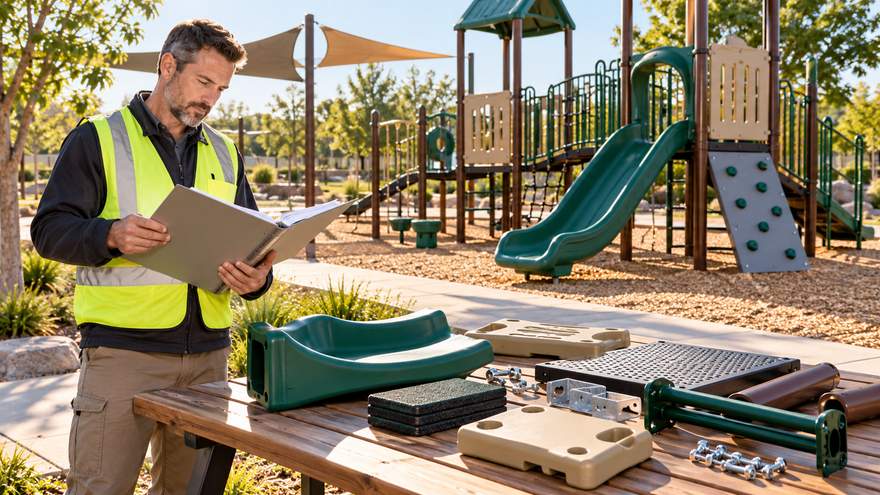
Materials and construction details also need a clear specification. Ask about the proposed components, finishes and maintenance information for the actual location. Avoid assuming one broad material label establishes product quality, suitability or lifetime cost. The comparison should show what is being supplied, not just whether a quotation mentions timber, steel, rope or plastic.
When considering custom playground equipment, identify what is customised. A themed appearance, an adjusted layout and an individually developed structure involve different work. Request a description of the design scope, review stages and quotation assumptions. Do not assume either a custom or a standard solution will always be cheaper for every project.
Concept illustration: Playground equipment material cost factors concept. AI-generated; not a completed NUUTOO project or construction drawing.
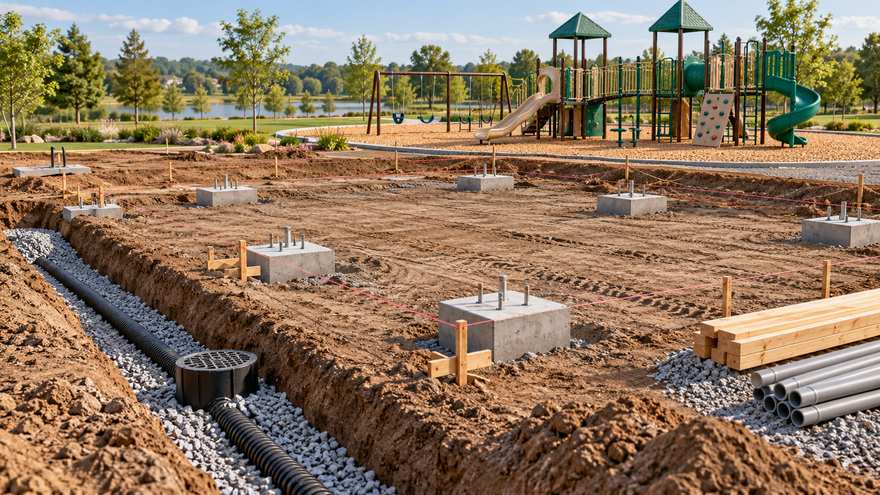
The condition of the site can change the work required before equipment arrives. Record levels, access, retained features and known underground services. Discuss surveys, clearance, excavation and foundation responsibilities with the relevant project parties. Unknown site information should remain an explicit assumption rather than disappearing from an apparently complete total.
Price playground surfacing against the proposed equipment and a coordinated area plan. The specification, edges, drainage and transitions need to work together. A decorative surface rendering does not establish the required construction or performance. Ask who confirms the specification and who supplies and installs each part.
Separate the equipment footprint from the total project area. Paths, entrances, seating, landscaping and maintenance access may need their own allowances. Cutting required equipment space to reduce a surface area is not an acceptable budgeting shortcut. If the allowance is insufficient, review the scope or activity selection through the proper design process.
Concept illustration: Playground site preparation budget concept. AI-generated; not a completed NUUTOO project or construction drawing.
Ask the supplier to identify the delivery basis and destination used in its quotation. Confirm packing, freight and the point at which local arrangements become the buyer's responsibility. Import charges, local transport and unloading can depend on the actual shipment and destination. Avoid treating an early freight allowance as a permanent or universally applicable shipping price.
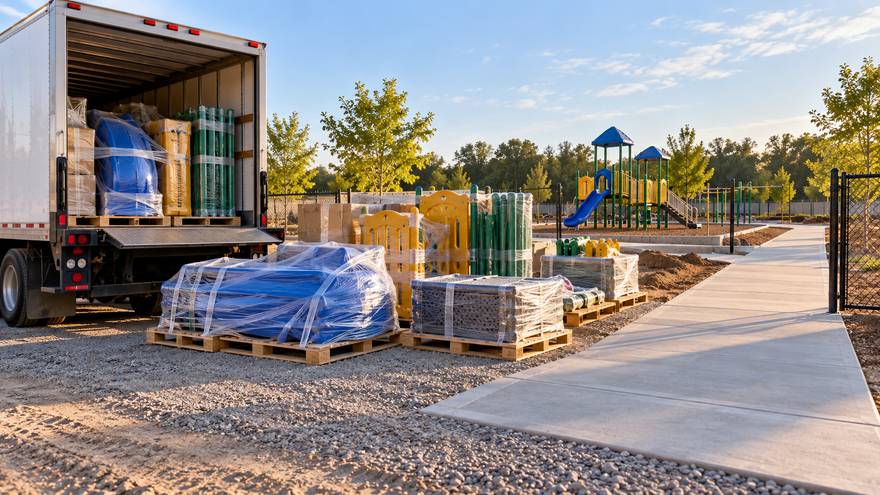
Review the route from unloading to the installation position. Access restrictions, storage arrangements and equipment handling can affect the local contractor's work. Identify who provides lifting resources, assembly labour and site coordination. An installation guidance service is different from a contract to complete every installation task, so put the agreed scope in writing.
Allow for the documents and checks required before handover. Ask for model instructions, parts references and the agreed inspection or acceptance process. For operation, consider routine inspection, cleaning and replacement access. These are planning categories rather than a promise about service life, warranty cover or a specific annual maintenance amount.
Concept illustration: Playground delivery and installation budget concept. AI-generated; not a completed NUUTOO project or construction drawing.
Send suppliers the same dated layout, activity schedule and scope statement. Request itemisation and ask them to label provisional figures, exclusions and optional items. A lower headline total is useful only after you understand which responsibilities and specifications it includes. Keep a record of any clarification that changes the comparison.
| Budget category | Question for the quotation | Comparison risk |
|---|---|---|
| Equipment | Which models, quantities and specifications are included? | Different activity schedules presented as equivalent |
| Design | What custom work and reviews are priced? | Concept work confused with construction information |
| Site works | Who supplies surveys, foundations and preparation? | Necessary local work omitted from the total |
| Surfacing | What area, specification and interfaces are included? | Decorative area compared with a coordinated specification |
| Delivery | Which destination, delivery terms and charges apply? | Equipment price compared with delivered cost |
| Installation | Who handles unloading, assembly and coordination? | Guidance mistaken for a full installation contract |
| Handover | Which documents, checks and support are included? | Unpriced responsibilities transferred to the operator |
Ask how the supplier will treat a change in quantities, layout or delivery assumptions. Reissue the cost schedule after a revision rather than combining prices from different design versions. Keep an allowance for identified uncertainties according to your organisation's budgeting process; no single contingency percentage suits every project.
Review the supplier's proposed capabilities using the commercial playground manufacturer selection guide. Price is one purchasing consideration alongside the clarity of the scope, applicable model documents and coordination responsibilities. NUUTOO's project proposal should be assessed against the same written brief you use for other suppliers.
Only for a clearly defined supply scope and specification. A broad playground category does not establish the site works, destination, installation or complete project cost.
No. Review the actual models, required surrounding space and coordinated layout. The relevant specification and site interfaces must also be established before comparing offers.
Not as a universal rule. Compare the actual scope, components and related work. The term custom does not describe the same design and manufacturing tasks in every proposal.
Provide better site information, a ranked activity brief and clear responsibilities. Ask suppliers to identify what remains provisional and what is needed to confirm it.
Dated site plan, location and delivery access photographs.
Intended users and a ranked activity schedule.
Proposed equipment models or an explained custom scope.
Equipment-only or complete-project budget boundary.
Currency, tax and delivery assumptions for comparison.
Site works, installation and handover responsibilities.
Use the NUUTOO project enquiry page to request a budget discussion based on your site and purchasing scope. Ask for the assumptions in writing before using a preliminary figure as an approved project budget.
Concept illustration: Playground maintenance budgeting concept. AI-generated; not a completed NUUTOO project or construction drawing.
 English