Views: 7 Author: NUUTOO Publish Time: 2026-10-30 Origin: Site

Table of Contents
1. Build the operating file from the installed equipment
2. Set checks around the product and the site
3. Review equipment surfacing and routes together
4. Turn defect reports into controlled repair decisions
5. Keep a maintenance checklist that supports decisions
6. Frequently Asked Questions and Quote Preparation
Commercial playground equipment maintenance starts with the instructions for the installed products, an accurate equipment inventory and clear responsibility for inspections and repairs. Operators should organise checks, record findings, report defects and control access when an item needs attention. Review equipment, surfacing and surrounding routes together, using people with the competence required for each task. Set inspection and maintenance intervals from the applicable instructions, project requirements, use and local conditions. A generic checklist helps organise the work but cannot establish a universal schedule or certify that an individual playground is ready for use.
Begin with the equipment that is actually installed, including its model references, quantities and location on the site. Retain the current layout, installation records and instructions supplied at handover. If equipment has changed since the original proposal, update the inventory rather than continuing to use an outdated sales list. The operator needs an identifiable reference for the item being inspected or repaired. Use the playground supplier documents checklist to organise missing handover information.
Discuss commercial playground equipment maintenance support with NUUTOO when agreeing the order and handover scope. Identify which instructions, parts information and contact route will be provided for the selected equipment. Public service information is a starting point for that discussion; the written project arrangement should explain what support applies and which operating responsibilities remain with the buyer.
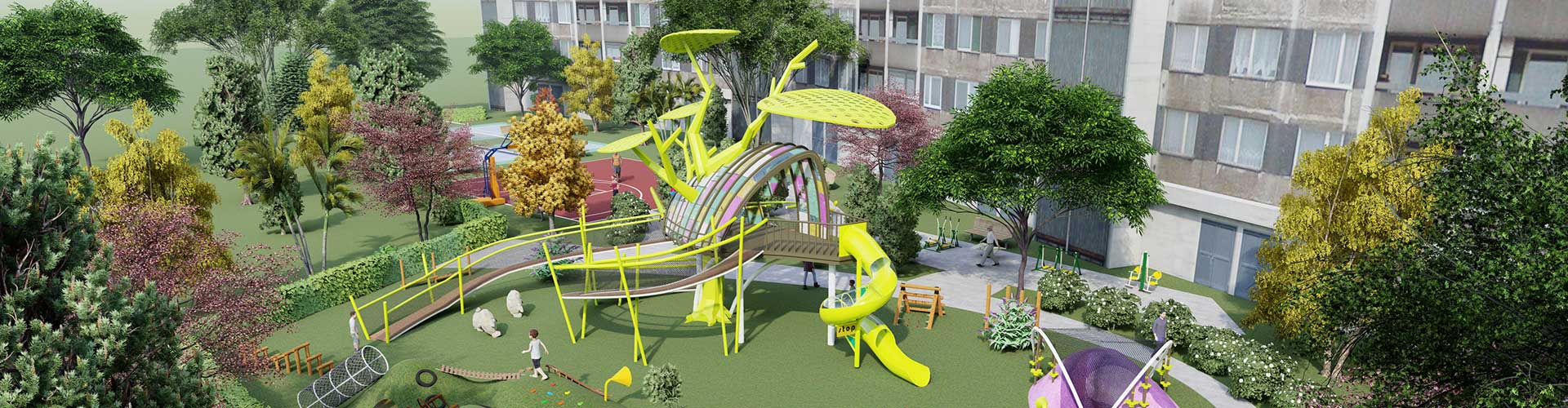
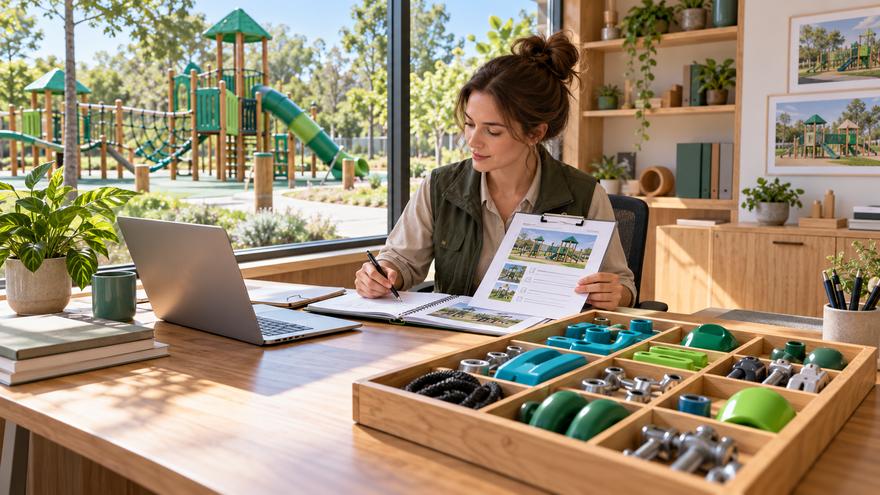
Concept illustration: Playground operator organising an equipment inventory and maintenance file. AI-generated; not a completed NUUTOO project or a technical drawing.
Define the purpose of each check and the competence needed to perform it. Some observations can identify visible concerns during normal site management; other inspections or repairs require specialist knowledge. Use the applicable product instructions and project requirements to organise those tasks. Record the role responsible for arranging the work as well as the person who carries it out, so findings have a clear route to action.
Set intervals using the relevant instructions, intensity of use and actual site conditions. Exposure, nearby activities and recurring findings may affect the plan. There is no single frequency that this article can prescribe for every installation. Review the schedule with the responsible advisers when conditions or equipment change, and keep the reasons for a revision in the operating record rather than silently changing a date.
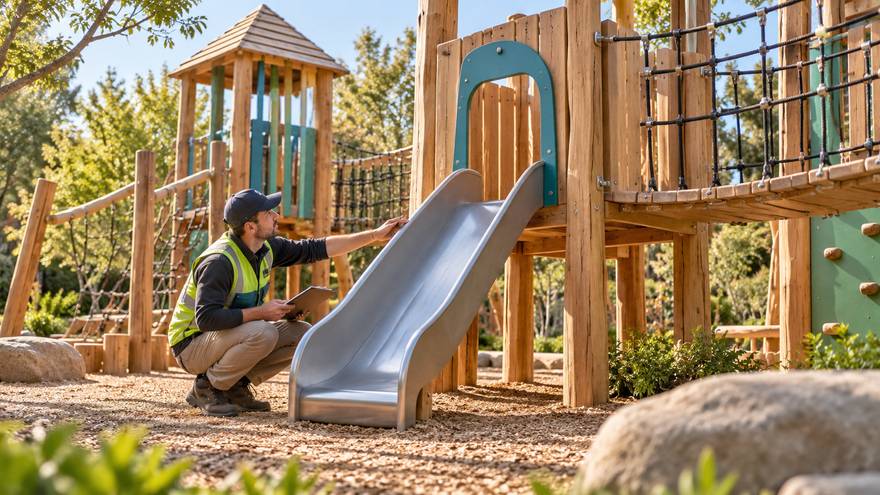
Concept illustration: Playground inspector observing a slide and nearby equipment connections. AI-generated; not a completed NUUTOO project or a technical drawing.
Use the equipment instructions to identify the relevant connections, components, movement and material condition to be reviewed. Keep inspection access in mind when planning the task. Record the location and description of a finding so another person can identify it accurately. Avoid tightening, adjusting or replacing a component by intuition when the applicable procedure or approved replacement information is unclear.
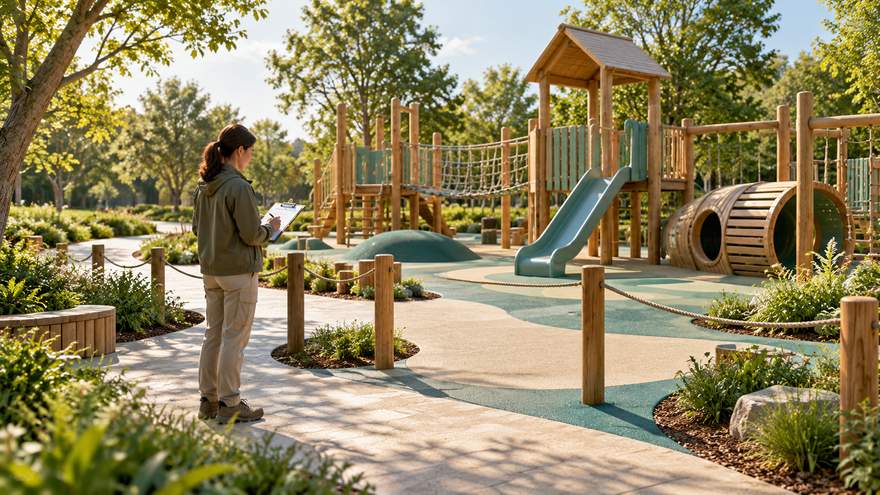
Review playground surfacing as part of the operating environment. Follow the instructions for the installed system and organise the relevant inspection or assessment process. Note visible displacement, deterioration, debris or other concerns for the responsible team to evaluate. This article provides no universal surface depth, repair material or acceptance criterion that can replace the actual system requirements.
Concept illustration: Caretaker examining playground surfacing and clear circulation routes. AI-generated; not a completed NUUTOO project or a technical drawing.
Establish a reporting route that staff and users can understand. A useful defect record identifies the equipment, location, observation date and the concern, supported by clear photographs where appropriate. Name the person responsible for reviewing it and record any immediate access restriction. Keep reports linked to the equipment inventory so recurring findings are visible instead of being scattered across unrelated messages and folders.
Where a concern may affect use, apply the site's agreed restriction and escalation process while the responsible person assesses it. Prevent casual access to an item that has been taken out of service. Do not assume that a warning in a maintenance notebook will reach visitors. The appropriate action depends on the finding and project arrangements; the operator should have a clear process before an issue occurs.
Specify repairs and replacement parts using the actual product information and competent advice. Confirm the model, component and applicable instructions before ordering. A visually similar part is not enough evidence of suitability. Keep the completed work, relevant checks and authorisation for return to use in the record. Closing a purchasing request or receiving a replacement does not establish that the equipment is ready to reopen.
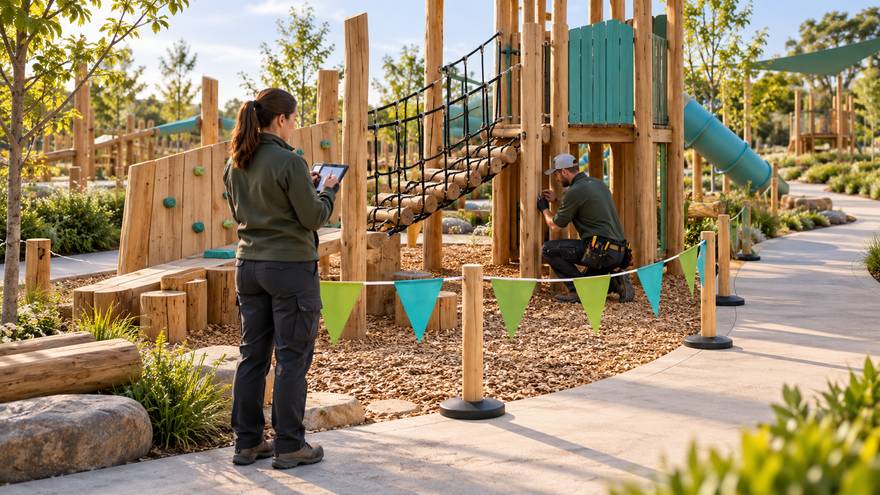
Concept illustration: Maintenance coordinator recording an isolated playground component issue. AI-generated; not a completed NUUTOO project or a technical drawing.
Use the table to connect an observation with evidence and follow-up. Adapt it to the installed products and the operator's procedures. It does not set inspection intervals or replace product-specific inspection criteria. Leave an item open when information or review is missing, and record the next responsible action rather than converting uncertainty into a completed checkbox.
| Review area | Record to retain | Follow-up to identify |
|---|---|---|
| Equipment identity | Inventory and current instructions | Resolve missing model information |
| Connections and components | Findings against applicable instructions | Competent review or specified repair |
| Surfacing and routes | System records and observed concerns | Surface contractor or site manager action |
| Reported defects | Item location date and access decision | Named reviewer and next action |
| Replacement work | Approved parts and completed work record | Required checks before return to use |
| Operating plan | Schedule responsibilities and review history | Update after changes or repeated findings |
Review maintenance needs when selecting the outdoor playground equipment mix, as well as after installation. Ask how components are identified, what access is needed for inspection and which documents the operator will receive. A purchasing decision should consider whether the operating team can arrange the required tasks with the resources and advice available to it.
Concept illustration: Playground operator reviewing maintenance records and spare component identification. AI-generated; not a completed NUUTOO project or a technical drawing.
Use the relevant product instructions, project requirements and site conditions to set the schedule with the responsible people. This general article cannot provide one interval for every product and location.
A general checklist can organise records and responsibilities. Adapt it to the installed equipment and surfacing, and retain the applicable instructions and technical inspection criteria.
Confirm the product identification and specified replacement with the relevant supplier or competent adviser. Appearance alone does not establish suitability for the installed item.
Follow the project's repair, review and authorisation process. Record the completed work and required checks before lifting the access restriction; delivery of a part alone is not completion.
Equipment inventory and model references
Current instructions and handover records
Site environment and operating arrangements
Known defects and photographs
Required inspection and maintenance support
Parts identification and responsibility for return to use
Send your project information through the NUUTOO project enquiry page and request a written scope for the actual equipment and destination.
 English