Views: 4 Author: NUUTOO Publish Time: 2026-11-05 Origin: Site

Table of Contents
1. Define the Equipment and the Required Edition
2. Ask for Evidence That Matches the Proposal
3. Coordinate the Whole Site Before Approval
4. Control Changes Through Installation
5. Assemble an Operating File the Owner Can Use
6. Frequently Asked Questions and Quote Preparation
For an ASTM F1487 playground equipment purchase, define the public use setting and intended users, name the required standard edition, and request evidence tied to the proposed models and configuration. Coordinate equipment, layout, surfacing, installation and operating responsibilities before accepting the proposal. A brochure statement does not establish that every component or the completed site has been assessed. Ask the project designer and responsible local parties to confirm applicable requirements, then record who will resolve document gaps, verify the installed work and maintain the operating file.
Begin with the intended setting. A school, municipal park or shared residential play area needs a clear description of who will use it and how the operator will manage access. The phrase public playground covers a purchasing context, while the actual equipment and users determine which documents need review. Identify the proposed structures, individual components and any unusual activities before asking for a compliance statement.
ASTM publishes F1487 as a consumer safety performance specification for public use playground equipment. Its publicly available revision work item identifies F1487-25 as the edition under revision. Confirm the required edition with the project specification and current publisher information when placing the order. A proposed revision is not itself a replacement standard. This guide provides a purchasing workflow and does not reproduce the technical clauses.
When comparing commercial outdoor playground equipment, include the model list and configuration drawing in the request. Flag equipment intended for a different setting or user group so the designer can establish the appropriate assessment route. Avoid applying one standard name indiscriminately to every item in a mixed activity park.
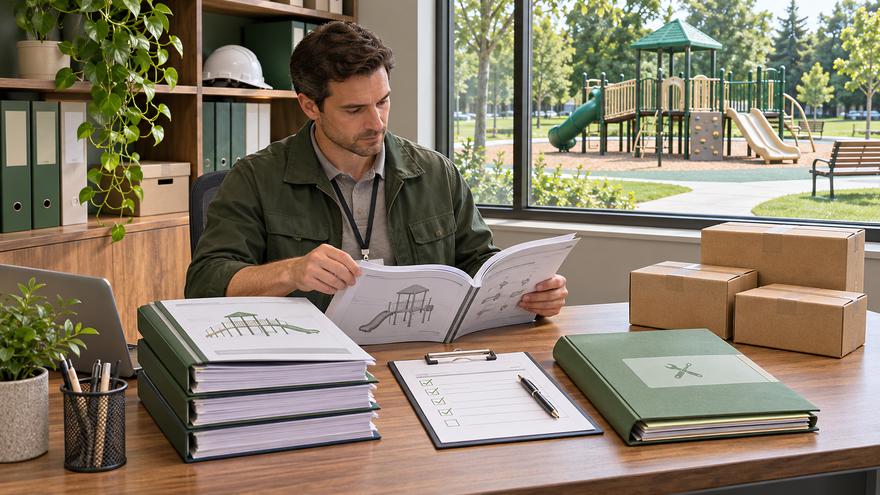
Concept illustration: Project buyer and designer reviewing a public playground plan and equipment evidence binder. AI-generated; not a completed NUUTOO project or a technical drawing.
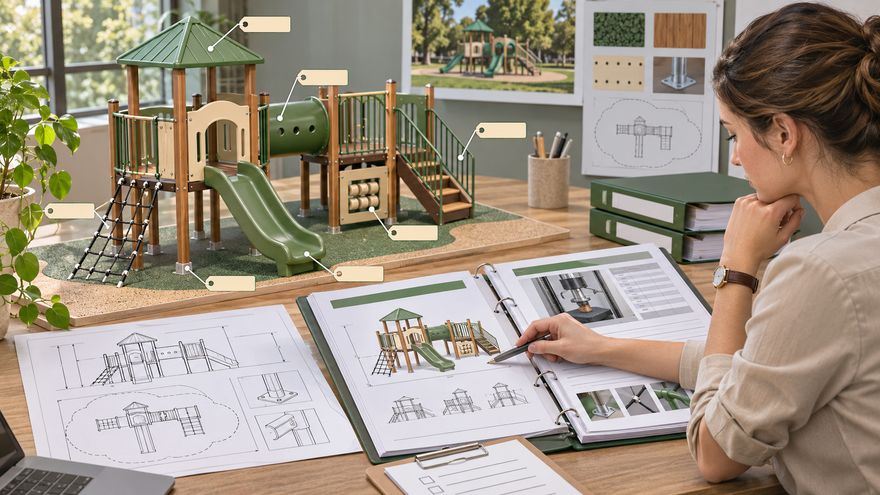
A useful submission connects the equipment you intend to buy to the documents being offered. Ask for the manufacturer identity, model or assembly reference, drawing revision and the scope of each supporting report or certification. Check whether the document covers the same configuration, materials and components. A report for an earlier assembly may require a written explanation before it can support a changed proposal.
Make the gaps visible in a short review register. Give each unresolved question an owner and a due stage, such as design approval, shipment release or site acceptance. The review should distinguish a missing document from an actual design change. Do not allow a broad marketing phrase to close either issue without the appropriate evidence.
The playground supplier documents checklist helps organize the submission. If third party certification is proposed, verify its exact scope and current listing with the named program. IPEMA publishes specific exclusions within its F1487 certification program, illustrating why a certificate should be read for what it covers.
Concept illustration: Equipment model and component documents arranged for a playground evidence review. AI-generated; not a completed NUUTOO project or a technical drawing.
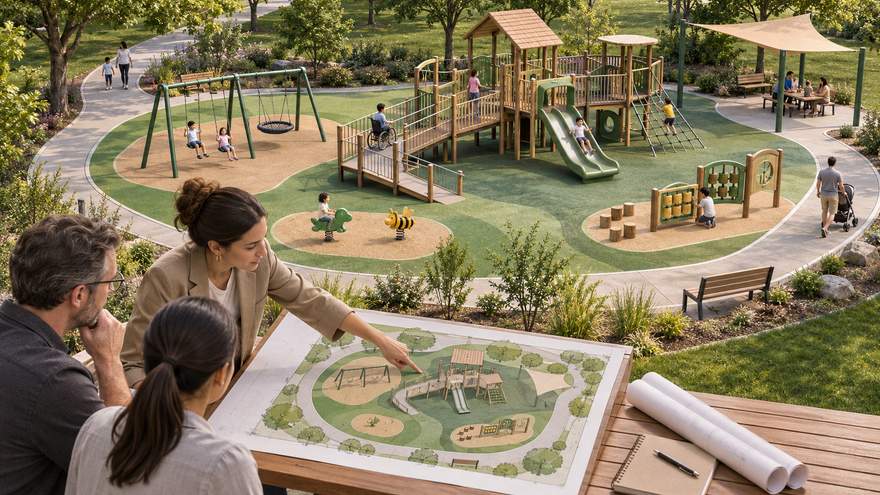
Equipment evidence is one part of the project file. The designer also needs a coordinated layout, surfacing scope and installation information for the actual site. An equipment arrangement can change when the boundary, path or neighbouring activity moves. Ask for an updated plan whenever a change affects the relationship between components, access routes and surrounding features.
Use a procurement table to assign the documents and decisions. It is a coordination aid rather than a technical pass or fail checklist. The responsible designer or qualified reviewer should establish the criteria for the particular project. The playground safety surfacing coordination guide covers the information handoff between equipment and surfacing packages.
| Procurement item | Evidence to request | Responsibility to agree |
|---|---|---|
| Equipment configuration | Model list and approved drawing revision | Supplier and project reviewer |
| Standard reference | Required edition and applicable scope | Project specifier |
| Surfacing interface | Site layout and relevant supporting information | Designer and surfacing contractor |
| Installation | Instructions and site responsibilities | Supplier and local installer |
| Acceptance and operation | Inspection record manuals and defect closure | Owner and appointed reviewers |
Keep accessibility and other applicable project requirements in the review even when equipment evidence references ASTM F1487. A purchasing specification should identify how these requirements will be checked and who coordinates them. Do not assume that reviewing one equipment report automatically completes the wider site assessment.
Concept illustration: Public playground plan showing equipment areas surfacing and an adjacent circulation route. AI-generated; not a completed NUUTOO project or a technical drawing.
Record the approved baseline before production or dispatch. Include the model schedule, layout revision, agreed documentation and outstanding conditions. If a supplier proposes a different component, ask what changes in the drawing, installation method, inspection needs and evidence. Obtain the required approvals before accepting the substitution as equivalent. A similar appearance is not a documented assessment.
Site readiness also needs an explicit owner. Confirm the information available about ground conditions, access, utilities, deliveries and construction sequencing. The playground installation site preparation checklist can support that discussion. Foundation and anchorage details must be developed and approved for the actual equipment and site by the responsible parties.
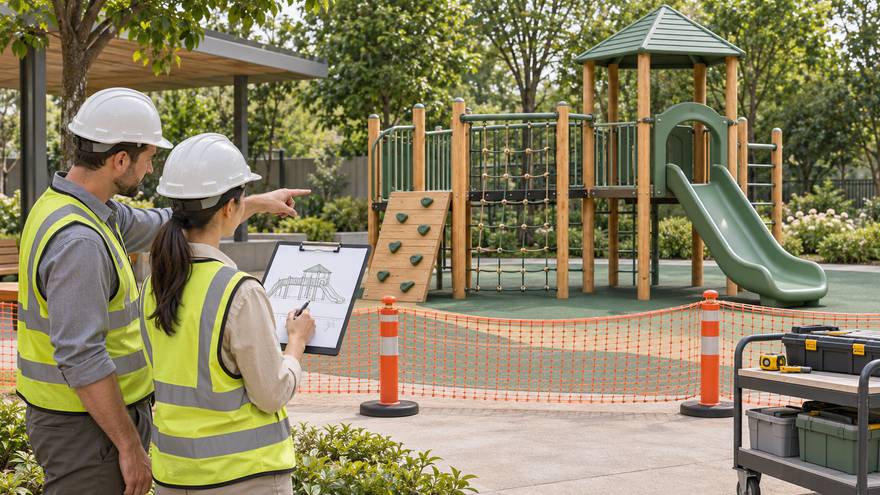
During installation, preserve instructions and record deviations or unresolved defects. Agree how incomplete work will be secured and how the operator will be informed. Keep the play area unavailable until the agreed review and release process is complete. Photographs can support the record, but they do not replace measurements, competent assessment or other evidence required by the project.
Concept illustration: Professionals reviewing an installation drawing at a closed playground construction site. AI-generated; not a completed NUUTOO project or a technical drawing.
The final package should allow a new facility manager to understand what was installed and what to do when a problem is reported. Include the final equipment identification, approved revisions, instructions, acceptance records, unresolved restrictions and the contact route for technical questions. Describe how the operator records inspections, escalates defects and documents a decision to return equipment to use.
Ask for maintenance guidance relevant to the supplied components and the site environment. Use the commercial playground maintenance checklist to organize responsibilities and records. Inspection intervals and replacement decisions need the manufacturer instructions, applicable requirements and actual operating conditions. This article does not prescribe a universal service interval.
NUUTOO supplies indoor and outdoor playground equipment and customized play space solutions. For a US project, ask for written confirmation of the proposed models, available supporting documents and the boundaries of design, installation and support. Treat any requested certification as a model specific evidence question. Procurement should close with an agreed scope and usable operating file, rather than an unsupported promise about the completed site.
Concept illustration: Facility manager organizing playground manuals inspection records and compatible spare components. AI-generated; not a completed NUUTOO project or a technical drawing.
No. A standard reference, a test report and third party certification describe different evidence. Verify the named models, configuration, edition, issuing organization and any exclusions.
Confirm the edition required by the project and current publisher information. Record the agreed edition in the technical submission and contract documents. Do not silently replace it because another document cites a different year.
The site still needs its applicable layout, surfacing, installation, accessibility and acceptance reviews. Assign responsibility for each interface and keep the resulting records together.
Send the destination, intended users, site plan, equipment schedule, required standards and proposed review process. Identify mandatory documents and clarify which local parties will approve design and installation.
Destination and public use setting with intended user groups
Site plan equipment preferences and configuration constraints
Required standard edition and documentation schedule
Surfacing installation acceptance and operating responsibilities
Requested scope exclusions and outstanding questions in writing
Send your project information through the NUUTOO project enquiry page and request a written scope for the actual equipment and destination.
 English