Views: 5 Author: NUUTOO Publish Time: 2026-10-20 Origin: NUUTOO
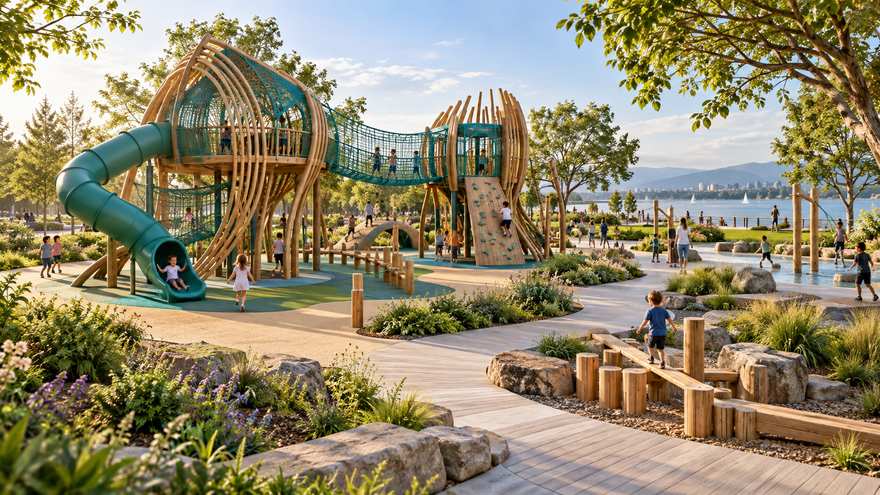
Table of Contents
1. Define what custom and modular mean in the proposal
2. Compare the activities and the site fit
3. Review design development and technical evidence
4. Compare purchasing and operating responsibilities
5. Use a comparison table and consider a hybrid layout
6. Frequently Asked Questions and Quote Preparation
Choose between custom and modular playground equipment by comparing the required play activities, site constraints, design scope and operating responsibilities. Custom work can address a particular theme or configuration; modular equipment uses defined components that can be arranged into a coordinated layout. Neither approach is automatically cheaper, safer, faster or more accessible. Ask suppliers to describe the actual components, technical information and project boundaries behind each proposal. A hybrid solution may also meet the brief, provided the interfaces, surrounding space and maintenance arrangements are reviewed together.
These terms do not describe identical work in every quotation. A custom proposal might involve a distinctive sculpture, altered dimensions, a themed enclosure or simply an arrangement selected for the site. Modular equipment generally combines defined components into a chosen configuration. Ask which elements are existing products, which require development and which are changed only in appearance.
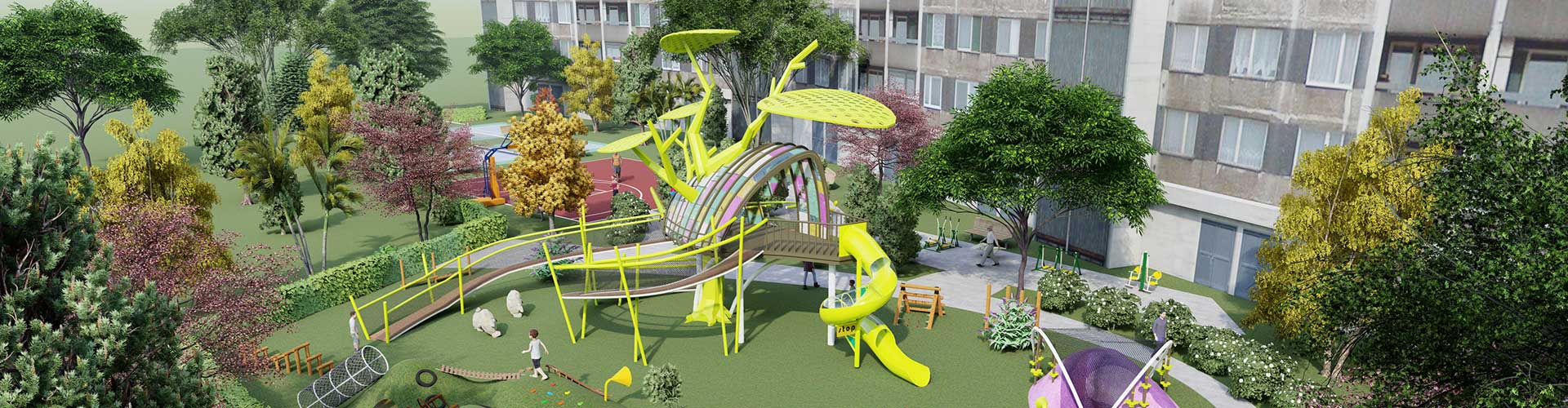
Review the custom playground equipment range as a conversation starter. Explain whether your priority is a recognisable theme, a particular sequence of activities or adaptation to the measured site. A visual reference should communicate intent rather than stand in for specifications, construction information or a permission to reproduce another designer's work.
Create a short comparison brief before selecting either approach. Identify intended users, essential activities, access needs and the organisation that will operate the space. These priorities make it possible to evaluate options on a common basis instead of assuming the more unusual rendering must offer greater play value.
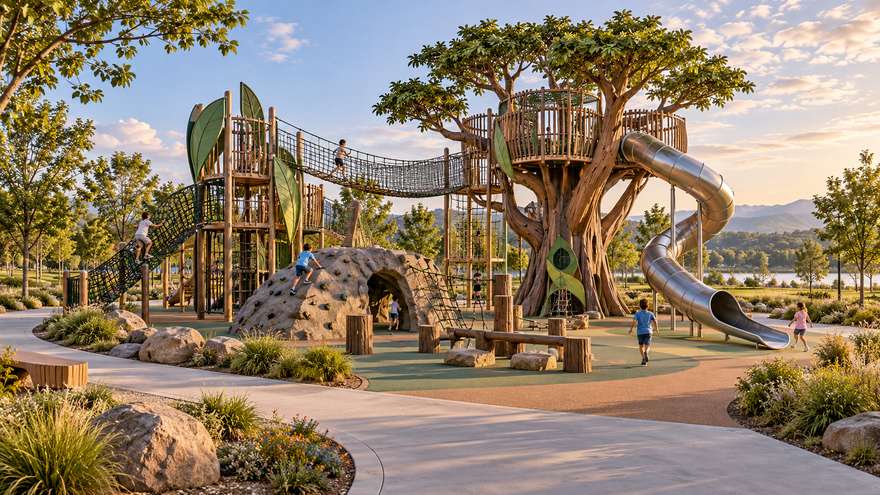
Concept illustration: Custom themed playground concept. AI-generated; not a completed NUUTOO project or construction drawing.
Start with the activities visitors should be able to choose. Climbing, sliding, balancing and imaginative play can appear in both custom and modular proposals. Compare how they are approached, connected and exited. Counting structures does not show whether a layout repeats the same activity or provides a useful variety of experiences for the intended users.
A modular configuration still needs to suit the actual site. Defined components do not remove the need to check dimensions, levels, foundations and the space around the equipment. Likewise, a custom form does not automatically resolve a difficult boundary or permit reduced surrounding space. Request the relevant model information and a coordinated plan for either option.
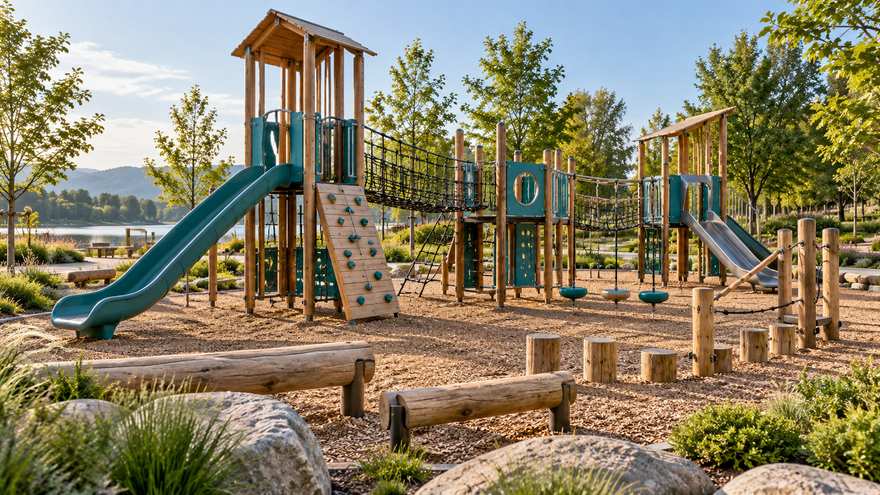
Use the broader playground equipment selection to explore possible combinations. Keep site entrances, retained features and routes visible on the drawing. If an option changes these relationships, ask the designer to explain the practical effect before approving it for appearance alone. Record which site assumptions remain provisional.
Concept illustration: Modular playground layout concept. AI-generated; not a completed NUUTOO project or construction drawing.
Ask how each proposal moves from concept to an agreed equipment schedule and the information needed for installation. Identify the drawings to be issued, the person responsible for reviewing them and the point at which changes affect the order. A highly detailed rendering can still leave materials, dimensions and interfaces unresolved.
For a custom structure, clarify the scope of individual development and the documents that will describe the resulting product. For a modular configuration, confirm the components and arrangement actually proposed. Familiar component names do not establish that every configuration has the same use conditions or that documents for another model cover your installation.
Provide the destination and project-specific requirements early. Request evidence appropriate to the supplied products and the applicable review process. Do not infer certification from a marketing label, material choice or visual similarity. Both custom and modular proposals need clear technical responsibilities; neither label guarantees universal compliance or replaces local project review.
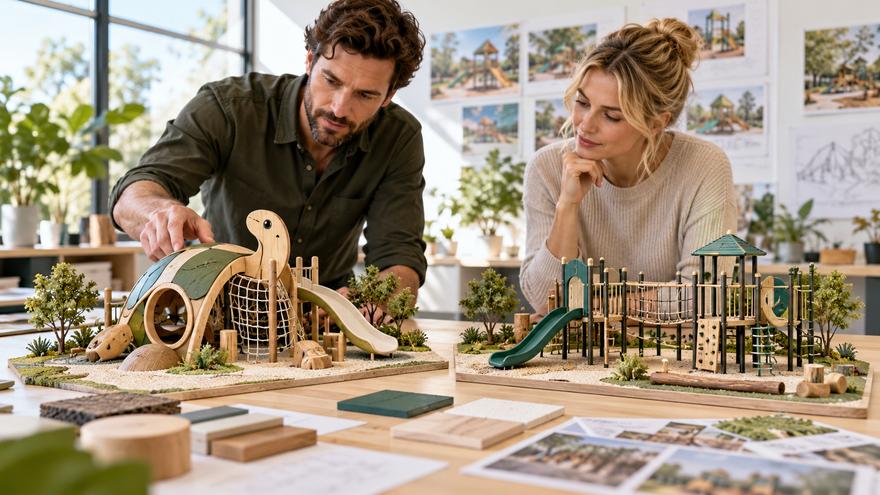
Concept illustration: Custom and modular playground comparison concept. AI-generated; not a completed NUUTOO project or construction drawing.
Budget comparisons should use the same activity priorities and purchasing boundaries. Ask whether the offer includes the relevant design work, equipment, packing, transport, installation support and handover documents. A lower equipment total may exclude work included elsewhere. No universal price or production-time rule reliably separates every custom proposal from every modular one.
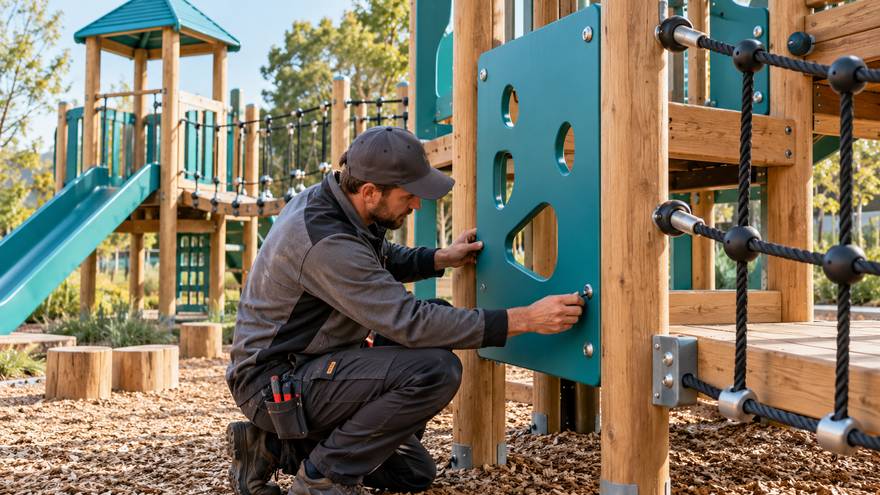
Discuss inspection and replacement arrangements before ordering. Ask how parts are identified, which items can be replaced independently and what information the operator receives. A modular system is not automatically easy to maintain if parts references or access are missing. A custom design can also have replaceable components if these are specified and documented.
Coordinate playground surfacing, foundations and surrounding site works with either option. Check who resolves interfaces between equipment and other contractors. Review the actual site conditions rather than assuming a catalogue arrangement or concept image establishes the complete installation scope. Support and warranty terms should be confirmed for the specific order.
Concept illustration: Playground replaceable component inspection concept. AI-generated; not a completed NUUTOO project or construction drawing.
Ask suppliers to explain differences using a shared schedule. The purpose is to understand which proposal meets the brief and what work remains, not to assign a universal winner to a product category.
| Decision | Custom proposal questions | Modular proposal questions |
|---|---|---|
| Play priorities | Which requested experiences require individual design? | Which defined components cover the activities? |
| Site fit | What dimensions and interfaces are being developed? | Does the selected arrangement fit the measured site? |
| Technical information | What drawings and product evidence will be issued? | Which documents cover these components and configuration? |
| Purchasing scope | What design and supply work is included? | What configuration and related work is included? |
| Maintenance | How are individual parts identified and replaced? | Which parts are replaceable and how are they referenced? |
| Future changes | What needs fresh review if the design changes? | What needs fresh review if the arrangement changes? |
A hybrid layout can combine a distinctive theme with defined play components. Review the connections, routes and responsibilities as one coordinated project. Combining products from different sources should not leave the buyer responsible for unresolved technical interfaces without an agreed review process. Describe the complete proposed arrangement in the project records.
Prepare the brief using the custom playground quotation preparation guide. NUUTOO provides indoor and outdoor play equipment and customised play-space solutions. Ask for options that respond to your requirements and compare the documented scope rather than assuming every online service description is included in the quotation.
Concept illustration: Hybrid custom and modular playground concept. AI-generated; not a completed NUUTOO project or construction drawing.
No. It may offer design flexibility, but actual models, required surrounding space and site conditions still need review. A modular or hybrid arrangement may also meet the brief.
Do not assume that. Confirm availability, design approval, production and delivery assumptions for the specific order. The label alone does not establish a reliable schedule.
Yes, a theme may be expressed through selected components, finishes and landscape coordination. Ask what is being changed and whether those changes affect the relevant technical information.
No general product label can establish that. Review meaningful access, activities, approaches and the applicable requirements for the actual proposal with the relevant project advisers.
Dated site plan, levels, entrances and retained features.
Intended users, priority activities and access needs.
Explanation of essential themes and optional visual preferences.
Comparable equipment, design and installation boundaries.
Required documents, review stages and approval contacts.
Operator resources and replacement-part expectations.
Send the comparison brief through the NUUTOO project enquiry page to discuss custom, modular or combined options for the actual site. Request a written scope for each option before making a purchasing decision.
 English