Views: 1 Author: NUUTOO Publish Time: 2026-10-26 Origin: Site
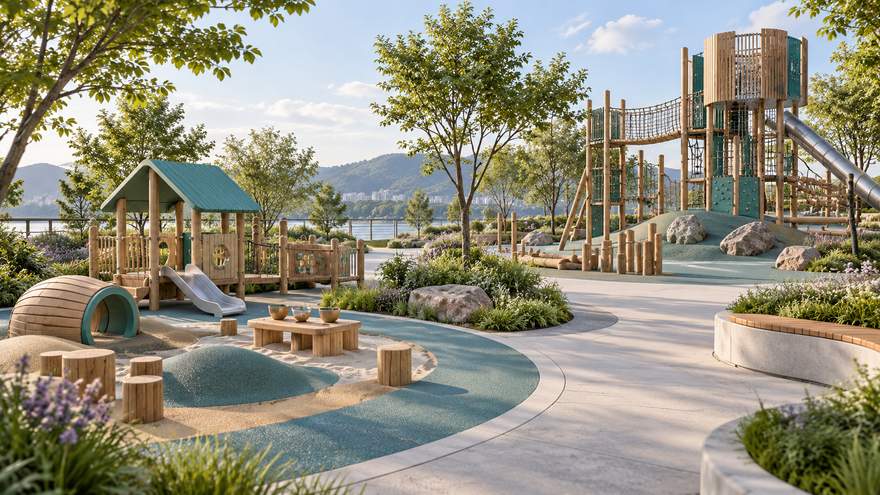
Table of Contents
1. Define the visitor groups and the operating context
2. Match activities and challenge to the proposed users
3. Coordinate zones, routes and caregiver observation
4. Check model information and meaningful access
5. Compare proposals and plan ongoing operation
6. Frequently Asked Questions and Quote Preparation
Plan playground equipment age groups by identifying the intended visitors, the activities they can choose and the documented use conditions of each proposed product. Provide a range of experiences and review challenge, access, circulation and caregiver observation together. Separate incompatible activities where needed without assuming that an age label alone resolves layout conflicts. Confirm model-specific age guidance and applicable project requirements with the relevant advisers. Do not assign a universal age range to equipment from its appearance, height or marketing name, and do not use age as a substitute for considering differing abilities.
Start with the people expected to use the space. A school may have defined classes and supervised sessions, while a public park can receive siblings, caregivers and visitors with varied abilities throughout the day. Ask the operator how groups arrive, where they wait and whether different activities take place at the same time. These details influence the layout before a product is selected.
Describe visitor needs in the project brief without making unsupported population assumptions. Record the operator's expected users and identify information still needed from the community or project advisers. Where the brief uses age bands, make their source clear. The bands are planning inputs; they do not automatically establish the suitability of every product proposed for that area.
Review the playground equipment selection against this brief. Ask suppliers for the intended use information of each model rather than accepting a broad catalogue statement about children of all ages. Keep access and activity choices visible for visitors whose preferences or abilities differ from assumptions associated with their age. A useful plan supports varied participation within its documented limits.
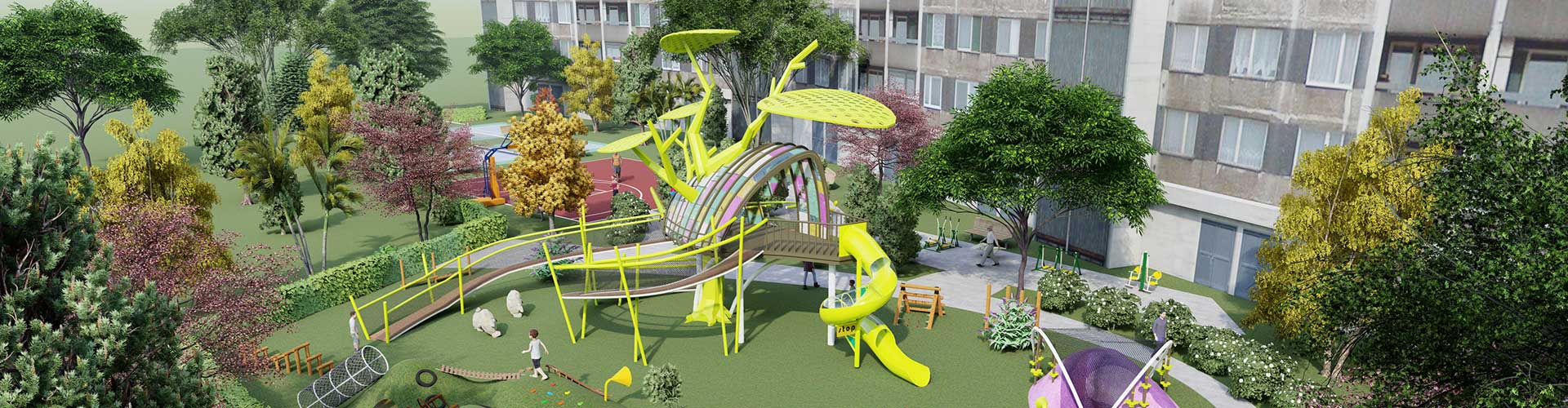
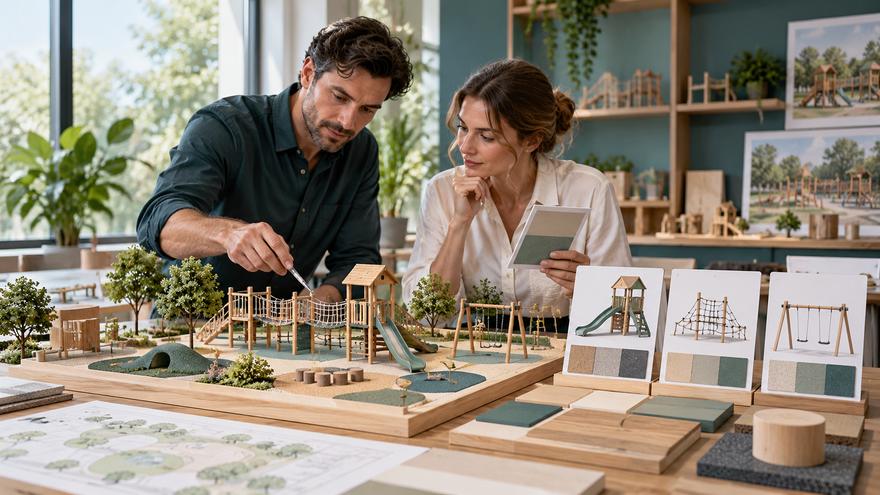
Concept illustration: Playground activity zones for different intended visitors concept. AI-generated; not a completed NUUTOO project or construction drawing.
Discuss what visitors should be able to do: explore, imagine, climb, slide, balance or play socially. Consider the sequence of approaches and exits as well as the central activity. A playhouse and a climbing structure can both encourage interaction, but they place different demands on users and require different coordination with the surrounding layout. Compare actual product information.
For younger intended visitors, the brief may prioritise clear approaches, manageable choices and opportunities for nearby caregiver interaction. This is a planning discussion, not a universal specification for a particular age. Ask how the proposed products support the brief and what their documented use conditions require. A low visual profile by itself does not prove that an item is suitable.
For visitors seeking more challenge, consider variety and progression without making height the sole measure of value. Climbing routes, balancing sequences and social activities can offer different experiences. The custom playground category can support discussion of configurations, but changes must still be reviewed for the actual products and site. Do not assume a custom theme creates an appropriate age range or removes technical requirements.
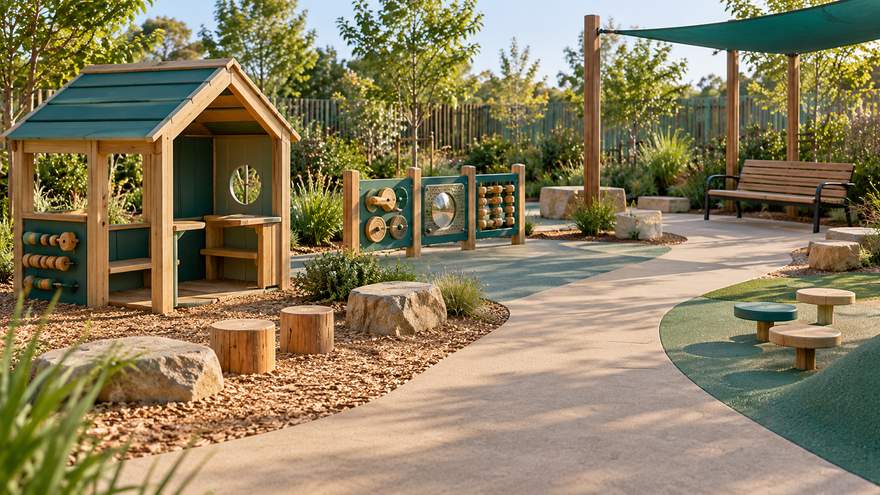
Concept illustration: Low-level exploratory play area concept. AI-generated; not a completed NUUTOO project or construction drawing.
Zoning can help the team manage activity relationships. Show the proposed areas on the plan together with entrances, seating, shared routes and transitions. Ask whether a visitor can reach the intended activity without crossing another activity's operating space. Review bottlenecks and the relationship between active play and waiting areas. A coloured boundary on a drawing does not create separation in the finished space.
Think about families and groups moving together. Caregivers may need to observe more than one activity area, and siblings may choose different experiences. Plan observation points and circulation so that supervision does not depend on standing in an equipment exit or blocking a route. Retained planting, screens and themed enclosures should be considered for their effect on views as well as appearance.
The child-friendly community planning guide discusses shared routes and observation in more detail. Apply those ideas to the intended visitors and operating model of your project. Where separation is needed, agree how the physical arrangement, operating procedures and product guidance work together. Labels and informal expectations should not carry the entire burden of managing conflicting activities.
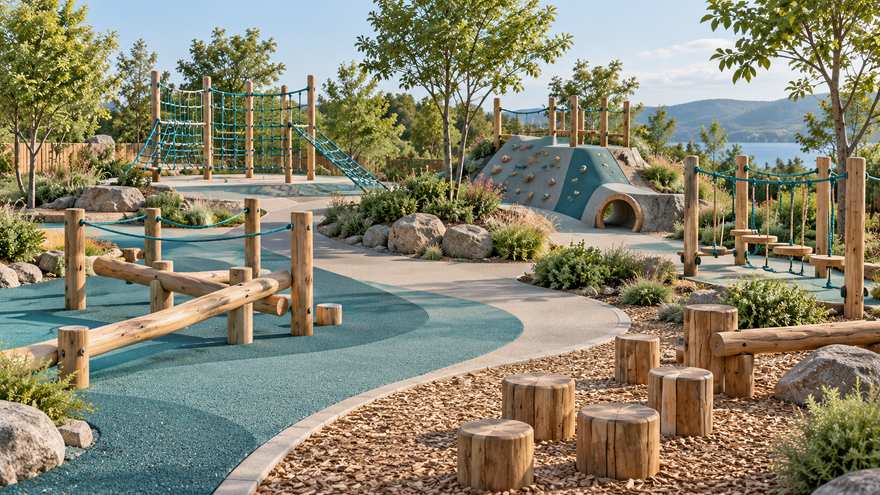
Concept illustration: Playground activity challenge progression concept. AI-generated; not a completed NUUTOO project or construction drawing.
Request the proposed model references, intended age guidance and use information before final selection. Ask whether supporting documents apply to the exact product and configuration. If a quotation combines components, review the complete arrangement rather than assuming that information for one component describes every connected activity. Record unresolved suitability questions and the party responsible for resolving them.
Age planning and access planning overlap, but neither replaces the other. Visitors in the same age group can have different mobility, sensory and communication needs. Discuss meaningful activity choices, approaches and social participation with the appropriate project advisers. A ramp, ground-level panel or accessibility label alone should not be treated as proof that the entire layout meets all relevant access requirements.
Coordinate the surrounding playground surfacing and routes with the equipment information and site design. Review levels, edges, drainage and maintenance interfaces through the responsible parties. Avoid copying dimensions or construction assumptions from a concept illustration. The final specification needs to respond to the actual equipment, project requirements and local conditions, with responsibilities clearly assigned.
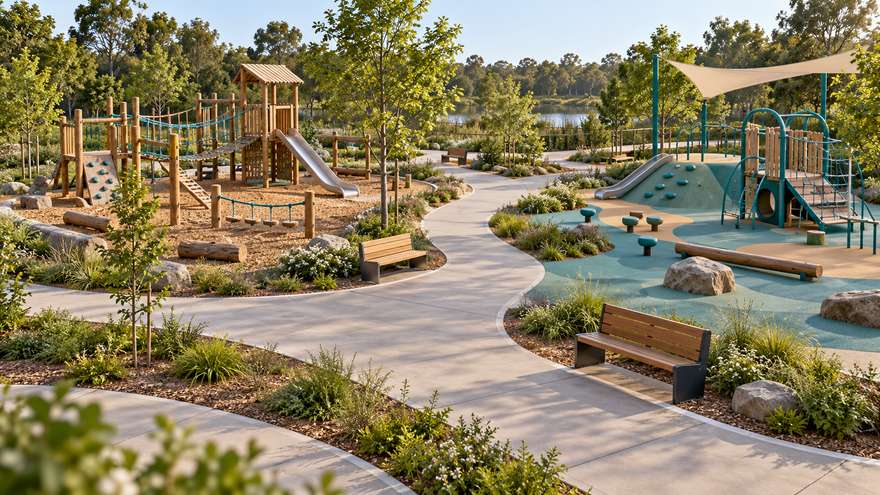
Concept illustration: Caregiver observation and playground circulation concept. AI-generated; not a completed NUUTOO project or construction drawing.
Ask suppliers to respond to a common brief and equipment schedule. A comparison should explain the activities, documented user guidance and coordination needs of each option. The table below helps organise questions; it does not assign fixed age bands or certify the suitability of an equipment type. Complete it using the information supplied for the actual proposed models.
| Planning decision | Buyer question | Information to request |
|---|---|---|
| Intended visitors | Which groups will use the space together? | Operator brief and consultation inputs |
| Activity choice | What experiences does each area offer? | Equipment schedule and activity description |
| Product suitability | What guidance covers the actual model? | Model-specific use and age information |
| Circulation | Do routes conflict with active areas? | Coordinated layout and equipment information |
| Observation | Where can caregivers watch and wait? | Sightline and seating review |
| Access and operation | Can intended visitors participate and the operator maintain it? | Access review and operating instructions |
Discuss signage, orientation and operating procedures before opening. Identify who prepares notices and how their wording will match the supplied product guidance and project requirements. Staff instructions should explain the agreed operating arrangements. Neither an age sign nor a general instruction to supervise children replaces suitable equipment selection, coordinated design or the relevant acceptance process.
Plan for inspection, maintenance and future changes. If an operator later adds equipment or reallocates an activity zone, review the effect on routes, use guidance and neighbouring activities. NUUTOO provides indoor and outdoor play equipment and customised play-space solutions; confirm the proposed models and support scope for the order. Keep the approved equipment schedule and user information available to the operating team.
Concept illustration: Model-specific playground use information review concept. AI-generated; not a completed NUUTOO project or construction drawing.
No. Obtain the use and age guidance for the specific model and configuration. Appearance, theme and approximate height do not provide a reliable substitute for product information and appropriate project review.
There is no universal answer for every project. Review the products, conflicting activities, circulation, supervision and applicable requirements. Agree suitable separation and operating arrangements for the actual proposal.
That depends on the layout, views, activities and operating expectations. Examine the proposed observation points and routes. Do not assume adjacency alone makes every activity easy to supervise together.
No. Review access, activity choice and participation separately with the relevant advisers. Visitors within one age group can have different needs, and a product age label does not establish whole-site accessibility.
Expected visitors, operating model and source of proposed age bands.
Priority activities and meaningful participation needs.
Measured site plan, entrances and retained features.
Caregiver observation, waiting and circulation priorities.
Required model-specific age and use documentation.
Review responsibilities, signage and maintenance arrangements.
Send the brief through the NUUTOO project enquiry page. Ask for a coordinated proposal that explains equipment choices and documented user guidance without substituting generic age claims for project-specific review.
 English