Views: 1 Author: NUUTOO Publish Time: 2026-10-14 Origin: NUUTOO
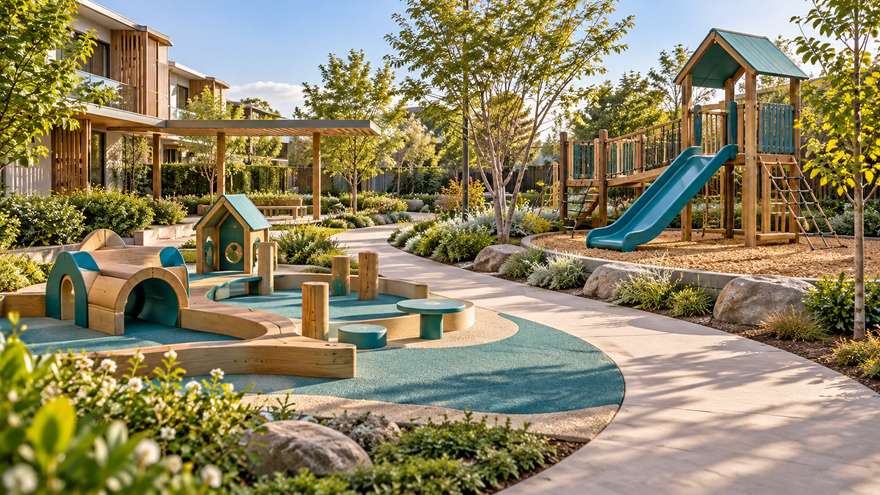
Table of Contents
1. Define shared use and the future operator
2. Keep everyday routes and observation workable
3. Select equipment that staff can inspect and support
4. Coordinate surfacing and the inspection process
5. Specify the operating handover package
6. Frequently Asked Questions and Quote Preparation
Residential playground equipment needs an operating plan as well as an equipment layout. For shared housing amenities, define the managing organisation, intended users, access arrangements and maintenance responsibilities before approving models. Coordinate equipment use zones, pedestrian routes, caregiver observation, surfacing and repair access on one dated plan. Request product-specific instructions and a clear handover package. This approach helps property teams maintain a usable shared amenity and compare service responsibilities without assuming that a product photograph, theme or general warranty statement describes the whole installation.
A residential playground continues to serve residents after the construction team leaves. Start by naming the organisation that will manage it and the person who receives its records. Ownership, day-to-day management and installation responsibility may belong to different parties. Record these roles so a defect report or spare-part request has a clear destination.
Describe how the amenity will be used: resident-only access, shared access with visitors, or a wider neighbourhood arrangement. Opening arrangements and any operational rules should reflect the actual site and local requirements. Do not assume an owners’ association or property manager has the same responsibilities in every country.
Use the residential playground equipment category to discuss possible products, then request the intended-use information for each proposed model. Shared use does not establish a universal capacity, age range or inspection interval. Those details need applicable instructions and project review.
The procurement brief should preserve the operator’s priorities: manageable inspection access, understandable routes and a practical replacement process. For initial product comparison, see the related community playground equipment buyer guide. This article focuses on the operating responsibilities that continue after that purchase decision.
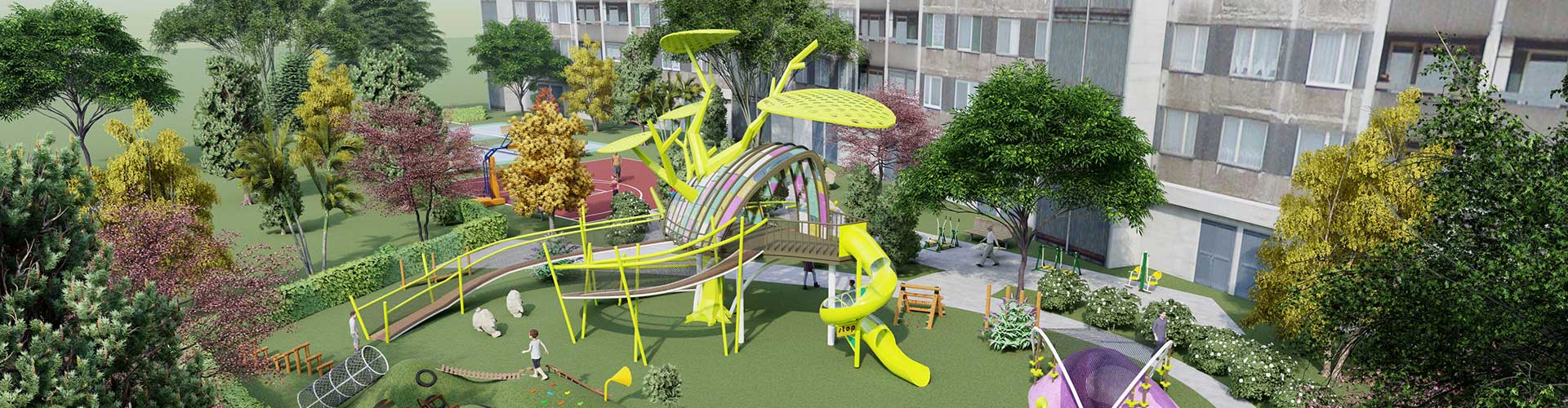
Concept illustration: Residential shared playground courtyard concept. AI-generated; not a completed NUUTOO project or construction drawing.
Review the playground as part of the residential landscape. Show entrances, building approaches, pedestrian routes, planting and service access on the same drawing as the equipment. People may walk through the surrounding area even when they are not using the playground. Review where those movements meet equipment approaches and exits.
Caregiver seating should support actual views of activities, including from a seated position. Check whether solid panels, planting or changes in level hide transitions between activities. A rendering from above can conceal a visibility problem. Review the layout from likely observation positions before approval.
For families arriving with siblings, pushchairs or mobility aids, consider the route into the play area and the space available to pause. Routes should connect to meaningful activities where the design requires it. Refer accessibility decisions to the relevant adviser and requirements; ground-level equipment is not automatically accessible to every user.
Avoid treating spare landscape space as an equipment use zone without technical review. Required surrounding space and installation information belong on the coordinated plan. If a project changes a boundary, bench or planting position, check the effect on routes and observation instead of treating it as a purely decorative adjustment.
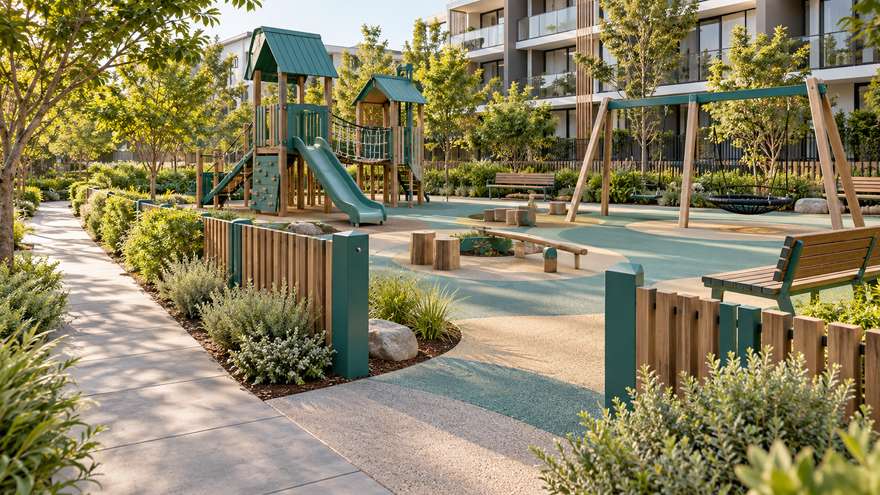
Concept illustration: Residential playground routes and observation concept. AI-generated; not a completed NUUTOO project or construction drawing.
Compare the practical care requirements of proposed models alongside their activities. Ask how staff identify worn or damaged parts, which connections need access and which information is supplied for replacements. The operator should be able to connect an installed item to its model and documents.
Review outdoor playground equipment with the actual site conditions in mind. Discuss sun, rainfall, drainage and any locally relevant environmental exposure. Ask for the specification of materials and finishes rather than predicting service life from appearance.
For wooden playground equipment, request the stated timber specification and care instructions. Metal, plastic and rope products likewise need their own documentation. A general material category does not establish the maintenance process for every assembly.
Plan replacement access early. Consider how a part or larger component reaches the installed location, who arranges the work and whether unrelated landscaping would obstruct it. Keep the route for occasional maintenance distinct from assumptions about everyday pedestrian circulation. These are coordination questions to resolve for the specific proposal, not reasons to promise a maintenance-free installation.
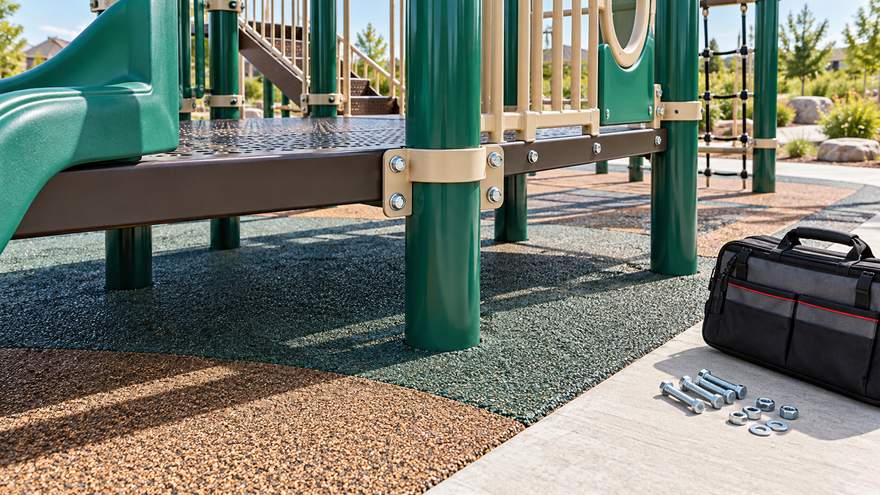
Concept illustration: Residential equipment inspection access concept. AI-generated; not a completed NUUTOO project or construction drawing.
The operator needs information for both equipment and playground surfacing. Confirm the surface system, drainage and relevant equipment characteristics through the appropriate project process. Do not select a universal surface thickness from an unrelated installation.
Ask which documents describe cleaning, inspection and repairs. Establish where the operator stores them and how an inspection observation becomes a work request. Inspection timing should follow applicable instructions and local project requirements, taking site conditions into account. Do not invent a single interval for every residential site.
Agree how staff identify and manage an affected area while a concern is investigated. This should be part of the operator’s procedure rather than an improvised reaction after opening. Confirm who can authorise repairs and whom staff contact for product information.
Keep records understandable to the next property management team. A dated equipment schedule, document list and parts references are more useful than an unexplained folder of images. Update records when approved replacements change the installation. A change to one component can require review of related instructions, surfacing or use zones.
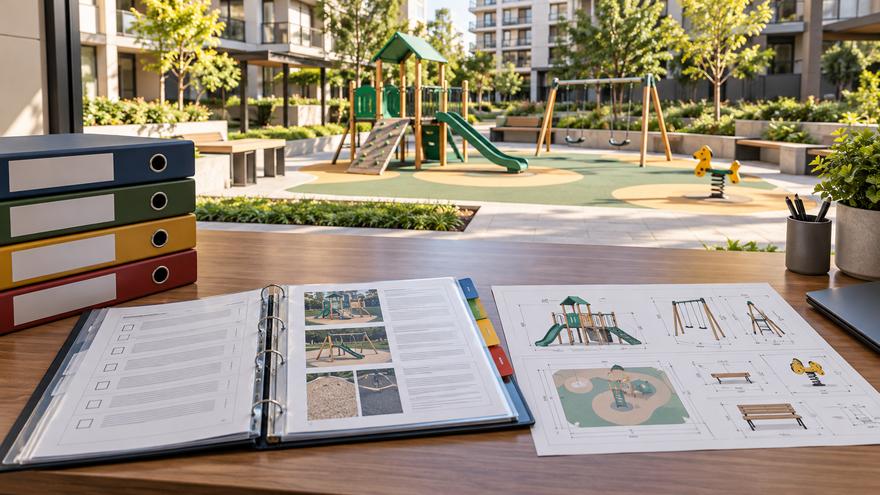
Concept illustration: Residential playground operating handover concept. AI-generated; not a completed NUUTOO project or construction drawing.
Compare handover responsibilities in writing. The following table helps buyers ask for evidence that remains useful after opening.
| Operating issue | Decision for the property team | Information to request |
|---|---|---|
| Ownership and management | Who holds records and authorises work | Named responsibilities and support contacts |
| Installed equipment | How each item is identified | Dated model schedule and final layout |
| Routine care | How inspections and cleaning are organised | Applicable instructions and record templates |
| Replacement parts | How staff report and order a component | Part references and reporting procedure |
| Site works | Who supports surfaces and drainage | Scope boundaries and contractor contacts |
| Acceptance | Who receives the completed installation | Required inspection and handover records |
Review warranty terms separately from routine maintenance duties. Clarify what the particular order includes, how claims are reported and who handles freight or site labour. Do not replace written terms with a general statement from a marketing page.
NUUTOO offers indoor and outdoor equipment and customised play-space solutions. Discuss custom playground equipment when the residential landscape needs a particular configuration, while keeping documentation and support requirements in the brief. Confirm the services included for the specific market and contract.
Name the responsible organisation in the project documents. It may be the property manager, owner or another agreed operator. Suppliers and contractors should have defined support roles rather than being assumed to manage daily operation.
No. Material specifications inform selection, but installed equipment and surfacing still need the appropriate care and inspection arrangements. Request applicable instructions and plan resources before purchase.
Review proposed changes against the layout, product information, surface system and local requirements. Keep revised records. A similar appearance does not prove a replacement has the same use conditions.
Agree the final layout, model list, instructions, relevant installation and inspection records, parts references and support contacts. Make the receiving organisation responsible for retaining and updating the package.
Measured site plan with shared routes and maintenance access.
Intended users and the proposed access arrangements.
Named owner, managing organisation and installation parties.
Site conditions, photographs and relevant local requirements.
Equipment and surfacing scope with contractor boundaries.
Required instructions, records and spare-part information.
Send these details through the NUUTOO project enquiry page to discuss a residential playground proposal with a defined operating handover.
Concept illustration: Residential playground ongoing care concept. AI-generated; not a completed NUUTOO project or construction drawing.
 English