Views: 3 Author: NUUTOO Publish Time: 2026-11-05 Origin: Site
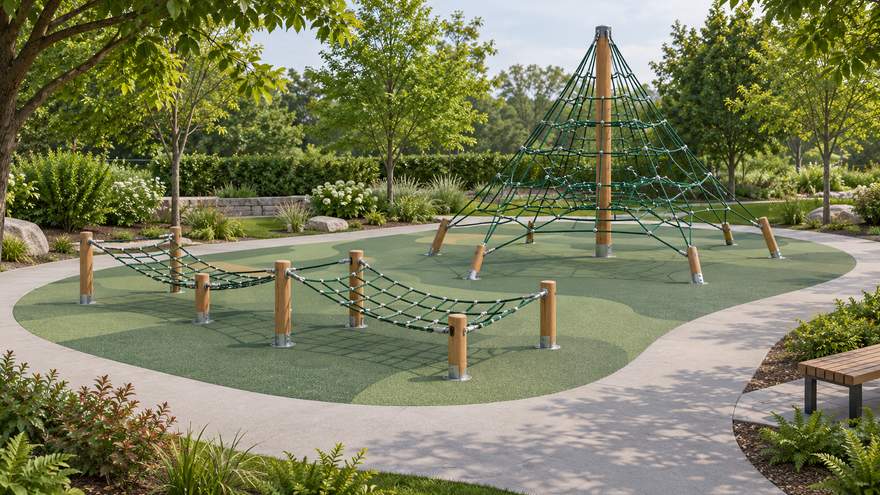
Table of Contents
1. Begin with the Intended Climbing Activity
2. Compare Complete Systems and Procurement Scope
3. Reserve Space for Movement and Site Coordination
4. Plan How Connections and Components Will Be Inspected
5. Agree Installation Handover and Replacement Planning
6. Frequently Asked Questions and Quote Preparation
Choose rope playground equipment by the intended climbing activity, user group, available site and the operator ability to inspect and maintain the system. Compare complete configurations rather than rope appearance alone. Request model specific drawings, applicable assessment information, installation instructions and replacement guidance. Keep circulation, adjacent equipment and surfacing coordinated on one plan. Before purchase, agree who will review foundations and connections, who will inspect the installed equipment and how damaged components will be isolated and replaced. A concept image can explain the activity but cannot establish suitability for a particular site.
A low traversing net, an inclined climbing panel and a three dimensional rope structure create different movements and operating questions. Start by describing what users should be able to do, how they reach the activity and how they leave it. A catalogue photograph may show the shape, but it rarely explains the complete route or the relationship to neighbouring equipment.
For a rope climbing playground project, ask for a proposed configuration and a clear activity description. Explain whether the setting is a school, public park, campground or commercial venue. Include intended age groups and the way the operator supervises the space. Do not assign a universal age range to all rope structures simply because they share a material.
Treat concept illustrations as discussion tools. They can help compare scale, visibility and activity choices, while model drawings and supporting documents establish what is actually being proposed. Record any feature that still requires technical review. This is especially useful when the visual concept combines nets, decks, slides or unusual landscape features within one composition.
Concept illustration: Concept rope playground with a low traverse net and a separate taller climbing structure. AI-generated; not a completed NUUTOO project or a technical drawing.
A rope system includes more than the visible net. Request the information needed to identify its supports, connections, components and installation requirements. Ask how the specified system will be supplied and which items must be provided locally. List any design development, foundation work, surfacing or site assembly that falls outside the equipment price.
Compare like for like submissions. A lower equipment figure may omit a different part of the project, while a visually similar net may have a different configuration or maintenance arrangement. The supplier documentation checklist can help the buyer create a consistent request. Keep questions about materials and assessment evidence tied to the actual model.
| Buyer decision | Information to request | Question to close |
|---|---|---|
| Climbing activity | Configuration and intended use description | Does it fit the intended users and operation |
| Equipment package | Identified components and supply boundaries | What must the local team provide |
| Site interface | Layout and installation requirements | Who coordinates surrounding work |
| Inspection access | Inspection instructions and access needs | Can the operator examine the whole system |
| Replacement planning | Compatible parts and replacement process | How will a damaged item be managed |
Maintain a written comparison of included and excluded work. If the concept changes during design, ask for a revised scope and record how the documentation is affected. Do not carry an earlier assessment statement forward without checking whether it still relates to the final proposal.
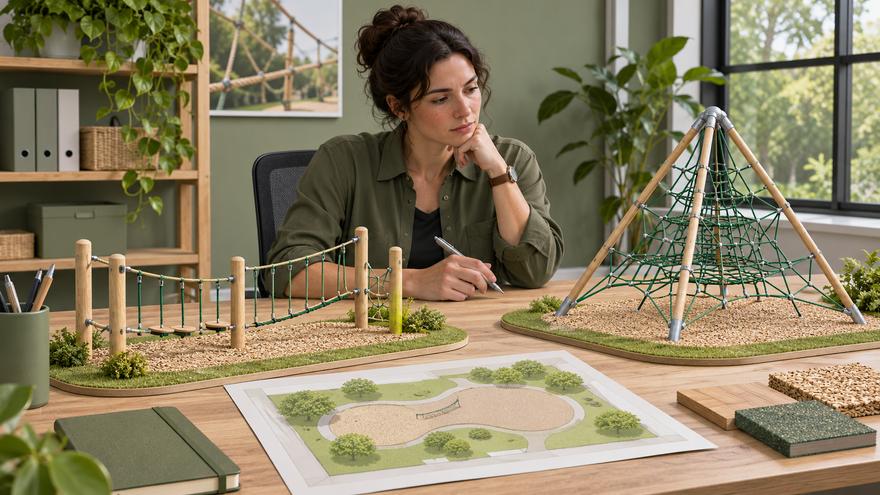
Concept illustration: Designer comparing low rope traverse and three dimensional climbing net scale models. AI-generated; not a completed NUUTOO project or a technical drawing.
Draw the climbing system, surrounding surfacing, paths, seating and other activities together. Discuss approach routes, crossing movements and how people gather near entrances. A net can become a visual attraction that encourages waiting or spectators, so the operator should consider those behaviours when reviewing the layout. Avoid treating unused space on a concept plan as automatically available for another piece of equipment.
The playground age group planning guide supports discussion of different users and activities. Use it to explain the intended operation to the designer, rather than deriving technical separation distances from a general article. The actual model, applicable criteria and site layout determine the design review.
Coordinate surfacing information with the equipment proposal and its installation requirements. Ask how ground levels, drainage, paths and site changes will be handled between packages. Keep the boundary of each contractor scope visible in the drawing set. If a route or level changes after equipment approval, return the affected interface to the responsible reviewer before construction proceeds.
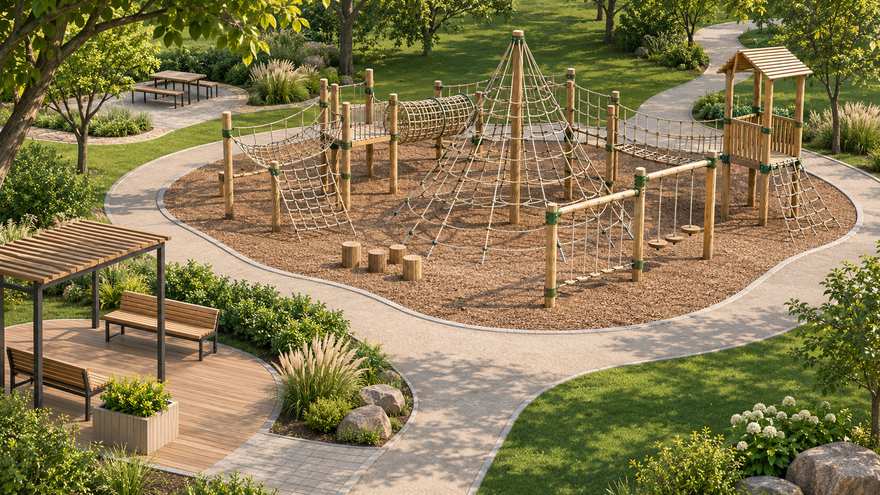
Concept illustration: Aerial rope playground concept with adjacent paths seating and open inspection access. AI-generated; not a completed NUUTOO project or a technical drawing.
Before committing to the layout, ask how inspection staff can examine the components identified in the manufacturer instructions. Consider visibility, physical access and any special equipment or competence required. An attractive structure is harder to operate if routine checks cannot reach important areas without obstructing the surrounding venue or using an unplanned access method.
The maintenance instructions should explain what the operator records and when technical advice is needed. Request guidance for the specific rope system, its connections and supporting structure. The playground maintenance record checklist provides a way to organize findings, responsibilities and follow up. It does not replace model specific inspection criteria.
Discuss the response to reported damage before opening. Identify who can restrict access, who reviews the condition and who authorizes repair or replacement. Keep compatible component references and technical contacts with the operating file. Avoid ad hoc substitutions or adjustments based only on a photograph. Where the manufacturer requires a particular method, the work should follow those instructions and the project approval process.
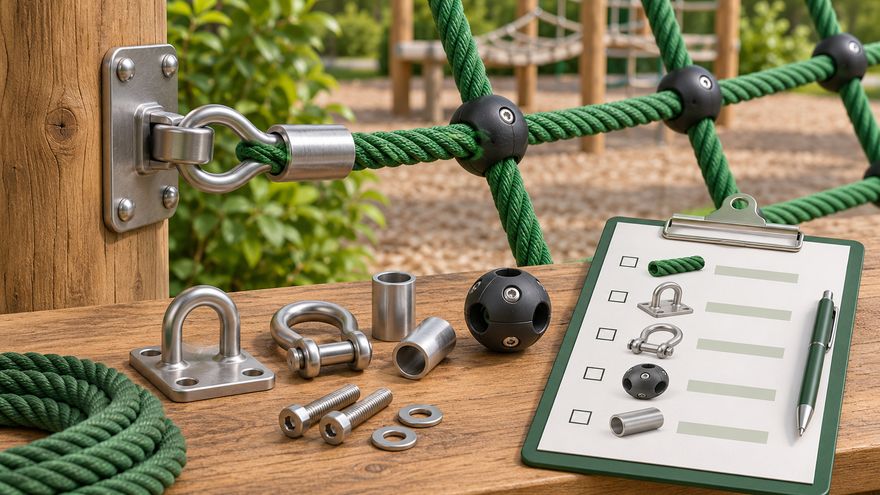
Concept illustration: Generic rope net connection and compatible components arranged beside an inspection clipboard. AI-generated; not a completed NUUTOO project or a technical drawing.
Use the installation site preparation guide to discuss delivery access, working areas, site information and the division of construction responsibilities. Ask the responsible parties to resolve foundations, anchorage and interfaces for the specific equipment. Generic illustrations in this article are not construction details or instructions for setting rope tension.
At handover, retain the final equipment identification, drawings, installation records, inspection findings and manuals. Record outstanding restrictions clearly and agree how they will be closed. Give the operator the information needed to recognize when to seek technical review, how to report a defect and how to prevent access while the issue is unresolved.
Ask about replacement components as a purchasing question, without assuming a fixed service life or guaranteed future availability. Confirm the ordering information, compatibility review and support scope in writing. NUUTOO offers playground equipment and customized play space solutions. For a rope system enquiry, provide the site and operating brief so the proposed activity, documentation and supply boundaries can be discussed for the actual project.
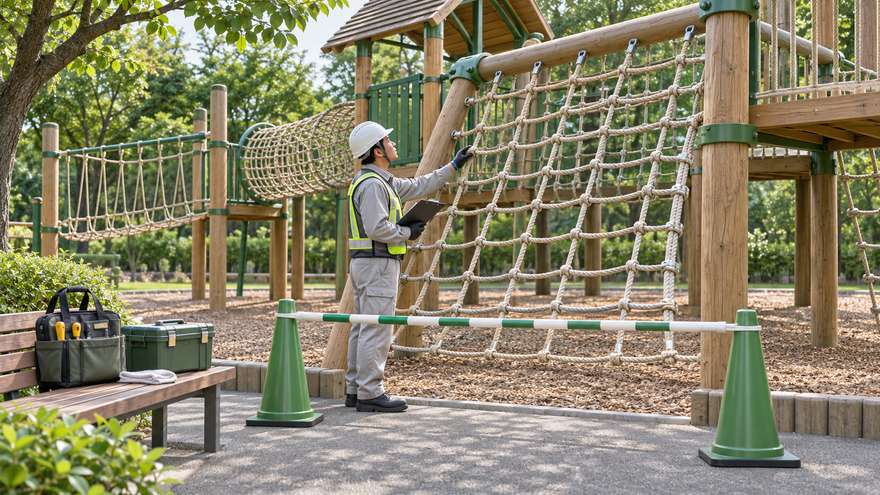
Concept illustration: Maintenance professional inspecting a closed rope playground with a temporary access barrier. AI-generated; not a completed NUUTOO project or a technical drawing.
No. Intended users and suitability depend on the particular configuration and supporting instructions. Provide the planned age groups and ask the responsible designer to review the proposed model.
A photograph helps explain appearance. Procurement also needs identified components, drawings, scope boundaries, installation requirements and relevant assessment information.
Confirm the required competence, approved component and replacement method with the manufacturer. The operator should secure affected equipment and follow the agreed review and release process.
Set the inspection program using manufacturer instructions, applicable project requirements and operating conditions. This guide does not provide a universal inspection frequency or rope replacement interval.
Site plan destination and intended users
Preferred climbing activities and adjacent equipment
Operating arrangements and inspection access constraints
Required documentation installation and surfacing scope
Replacement support questions and written scope boundaries
Send your project information through the NUUTOO project enquiry page and request a written scope for the actual equipment and destination.
 English