Views: 2 Author: NUUTOO Publish Time: 2026-11-02 Origin: Site
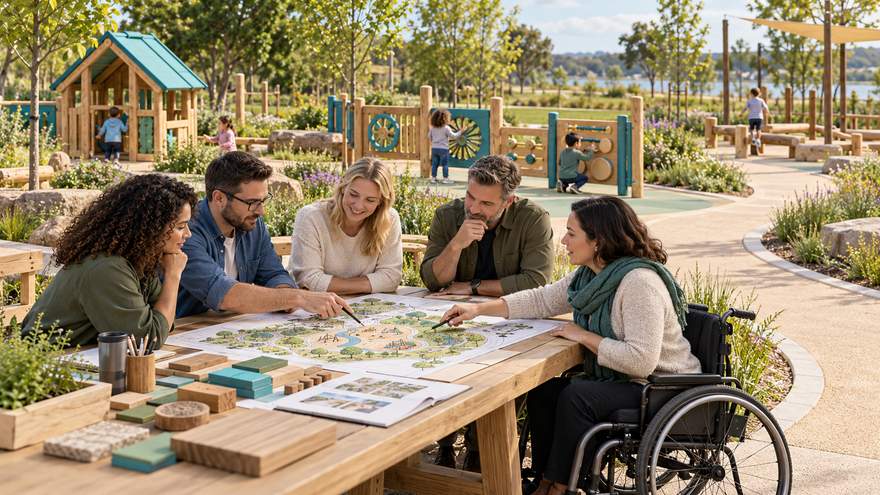
Table of Contents
1. Define participation goals with the intended community
2. Follow the journey from arrival to a play activity
3. Offer different ways to participate in shared play
4. Keep participation possible through daily operations
5. Compare proposals against a written participation brief
6. Frequently Asked Questions and Quote Preparation
Inclusive playground design considers the whole visit, from arrival and movement through the site to the activities children can choose and share. Start with the intended community, consult people with different access and participation needs, and review routes, equipment, surfacing and caregiver arrangements together. An accessible entrance alone does not establish an inclusive play experience. Ask the responsible project advisers to review applicable requirements and the actual equipment information. Record the agreed participation goals and purchasing responsibilities before approving a concept or describing a finished space as inclusive.
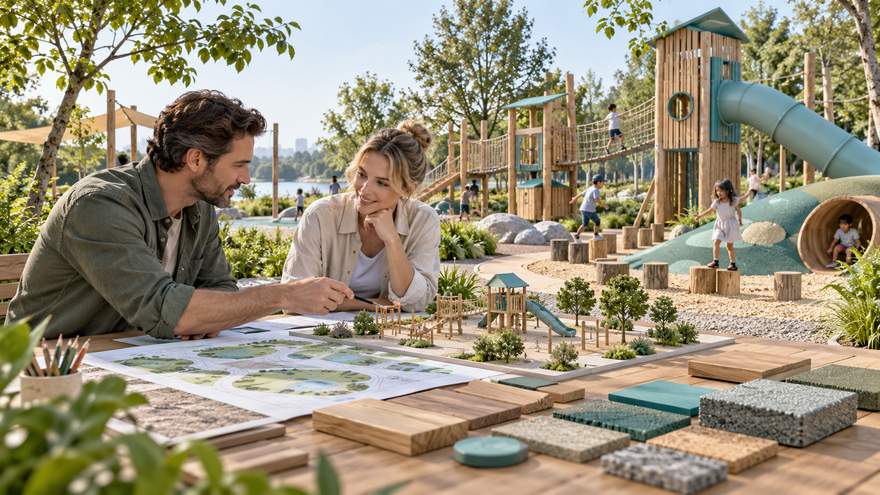
A public playground serves children and accompanying adults with different ways of moving, communicating, understanding information and joining an activity. Begin by asking what a useful visit should allow them to do. A family may want to arrive together, find a suitable activity, pause nearby and leave without retracing a difficult route. Record those experiences in the brief before selecting a visual theme or filling the site with products.
Invite input from prospective users, caregivers, the operator and relevant project advisers. Ask about practical barriers and preferred activities without assuming that one person's experience represents everyone. The brief for inclusive playground design should distinguish participation goals from technical requirements. Keep unanswered questions visible, identify who will review them and explain how feedback can change the proposed layout. Consultation informs decisions; it does not replace the required site and product review.
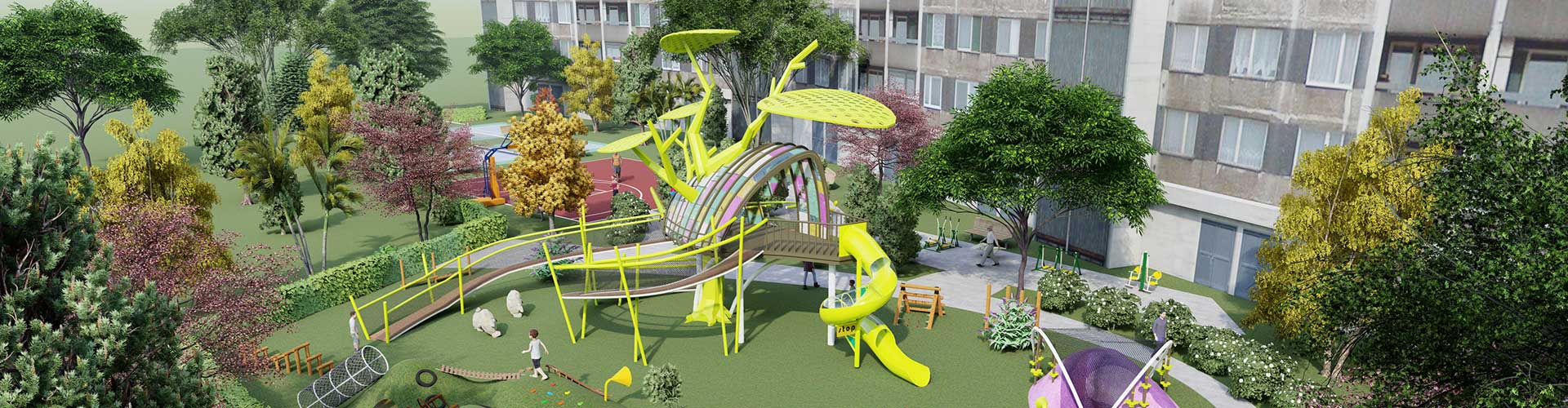
Concept illustration: Public park planning team including an adult wheelchair user discussing play participation around a broad outdoor table. AI-generated; not a completed NUUTOO project or a technical drawing.
Trace a realistic visit on the measured plan. Consider the route from the site entrance, the transitions into the play area, places to pause and the way users reach specific activities. Review gates, changes in level, surface transitions and nearby furniture with the responsible designers. A route that reaches the perimeter but ends before a meaningful activity leaves an important planning question unresolved. The equipment plan and landscape plan should describe the same journey.
Use the commercial playground design process to coordinate responsibilities and changes. Ask advisers to review dimensions, gradients, transitions and access requirements for the actual destination; this guide does not set universal measurements. Consider the movement of caregivers and mobility aids as part of the same visit. Retain the reviewed version so later additions such as a bench, planting bed or queue do not silently interrupt the intended route.
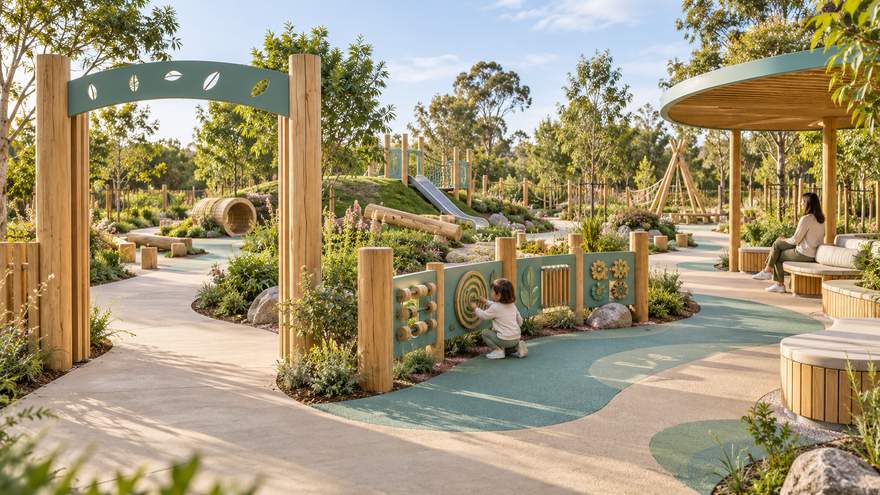
Concept illustration: Continuous landscaped route connecting a park entrance and caregiver seating to ground level play panels. AI-generated; not a completed NUUTOO project or a technical drawing.
Describe the experience offered by each proposed item instead of relying only on its appearance. Ground-level interaction, imaginative play, movement and quieter observation can offer different choices. Review whether users can join an activity together and how a child can move between participation and a break. A list of products labelled accessible is not a substitute for considering the relationships between them. Avoid making a claim that every user can use every item.
The playground equipment age groups guide can support the activity schedule, alongside the selected products' user information. Ask what assistance may be needed and where an accompanying adult can stand or sit without obstructing another activity. Consider quieter spaces and legible choices while keeping observation practical. Document the intended use of each product and request evidence for any specific accessibility feature rather than extending a general catalogue description to a different configuration.
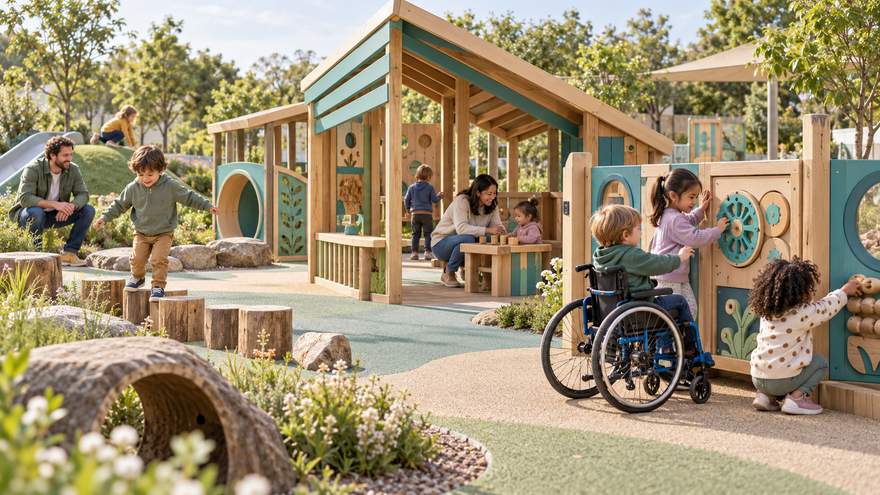
Concept illustration: Children and caregivers sharing ground level imaginative and interactive play with varied activity choices in a public park. AI-generated; not a completed NUUTOO project or a technical drawing.
The operating plan influences whether the intended experience remains available. Discuss how staff report an obstructed route, a damaged component or a surface problem and how the responsible person decides what happens next. A closure may remove an important participation choice even while other items remain open. Record how the operator communicates a change and what needs review before an activity returns to use. Do not present good intentions as a verified operating outcome.
Use the playground maintenance checklist to organise the equipment inventory, instructions and defect records. Set actual inspection and maintenance arrangements from the applicable requirements, product guidance, use and site conditions. Review access routes and equipment interfaces together rather than assigning them to separate teams with no shared record. Identify responsibility for movable furniture, vegetation and temporary events that may alter the reviewed layout.
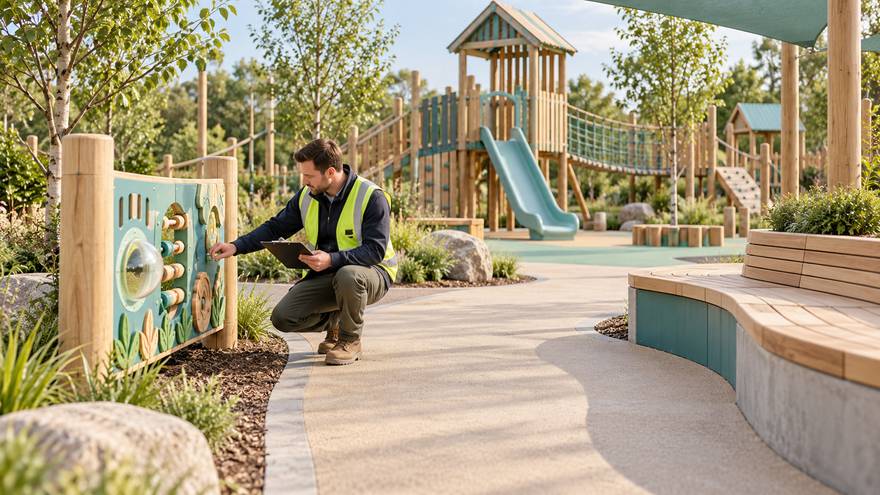
Concept illustration: Park operator inspecting a clear path and a play panel beside caregiver seating with a maintenance checklist. AI-generated; not a completed NUUTOO project or a technical drawing.
Give suppliers the same site information and participation priorities. NUUTOO provides indoor and outdoor playground equipment and customised play-space solutions; the particular products and services proposed for a public project should be confirmed in writing. Request a layout, equipment schedule and explanation of assumptions. A concept image can support discussion, but it cannot demonstrate access performance, certification scope or suitability for every intended user. Keep purchasing decisions connected to the reviewed brief.
| Project input | Response to request | Decision to record |
|---|---|---|
| Community participation goals | Activity choices and intended users | How feedback affects selection |
| Measured routes and site interfaces | Coordinated equipment and landscape information | Responsible access and technical review |
| Caregiver and quieter activity needs | Observation and assistance arrangements | Spaces and transitions to retain |
| Operations and local requirements | Product evidence and maintenance information | Approval and change responsibilities |
Compare included items and exclusions before comparing totals. Ask whether surfacing, local site works, review services, installation and handover documents are included or supplied separately. Request product-specific evidence for the selected destination and configuration. Keep commercial terms distinct from design intentions, with no assumed price, delivery period, warranty or certification. Use a recorded change process if a product, route or participation goal changes after the proposal has been reviewed.
Concept illustration: Project buyer and playground designer reviewing a shared play layout material samples and a participation checklist. AI-generated; not a completed NUUTOO project or a technical drawing.
An entrance is one part of the visit. Review access to meaningful activities, shared participation, caregiver arrangements and continuing operations as well as the route into the site.
The planning goal is a useful range of participation choices. Review actual products and user guidance without promising that every item is suitable for every visitor.
No. The responsible advisers need the actual layout, product information and applicable requirements. Illustrations help discussion but do not establish compliance.
Identify the project approval contact and relevant technical advisers in the brief. Review participation, routes and equipment interfaces together when a proposed change affects them.
Measured site and arrival routes
Intended users and consultation findings
Participation goals and activity priorities
Caregiver seating assistance and quieter spaces
Surface and equipment interfaces for review
Required documents responsibilities and approval contact
Send your project information through the NUUTOO project enquiry page and request a written scope for the actual equipment and destination.
 English